

 17 hours ago
7
17 hours ago
7
PROTECT YOURSELF with Orgo-Life® QUANTUM TECHNOLOGY
Orgo-Life the new way to the future Advertising by AdpathwayFor Nepali people, August 26 started like any other day, just another routine morning for the communities in Rasuwa, Nuwakot, Dhading, Gorkha, and Chitwan. But there is a saying in Nepal: “Disaster won’t come by making noise.” On Wednesday, people experienced that reality ruthlessly.
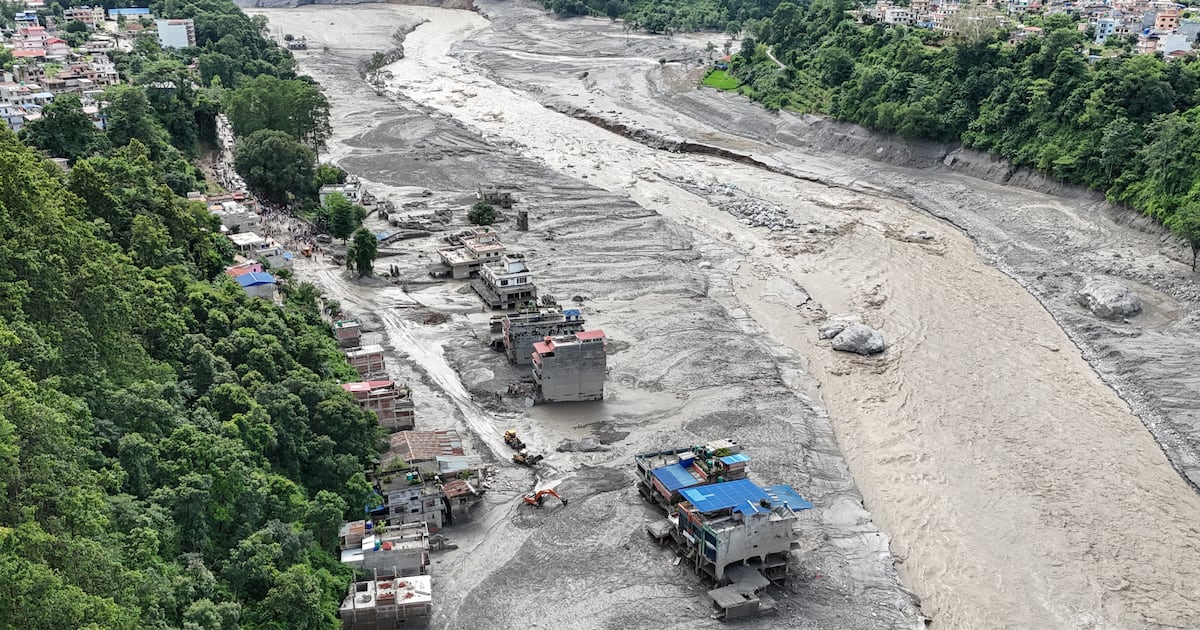
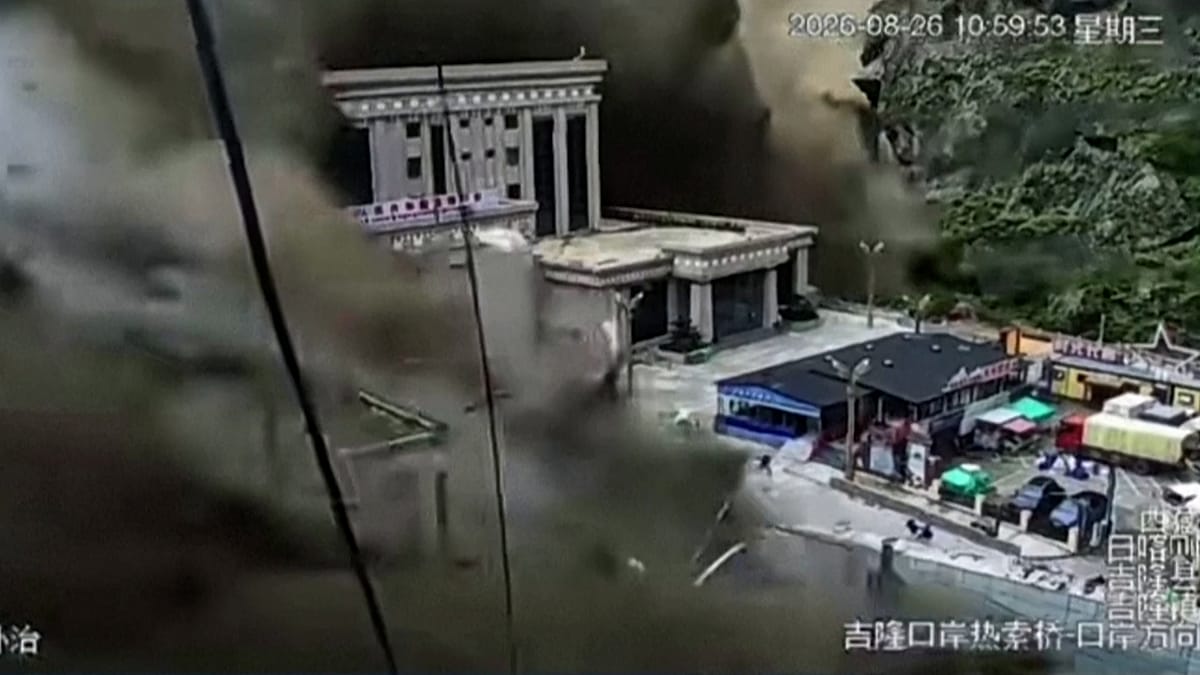
By midday, that ordinary morning had turned into a nightmare. A sudden flood that crashed down from the northern side of the border devastated multiple districts of Nepal. The customs office of the Nepal-China border, Syaphrubeshi, Betrawati, Timure, and Trisuli area in Rasuwa district all suffered extensive damage. Entire villages were swept away. The floodwaters then rushed toward the Trishuli River, threatening more settlements in the areas of Nuwakot and Dhading.
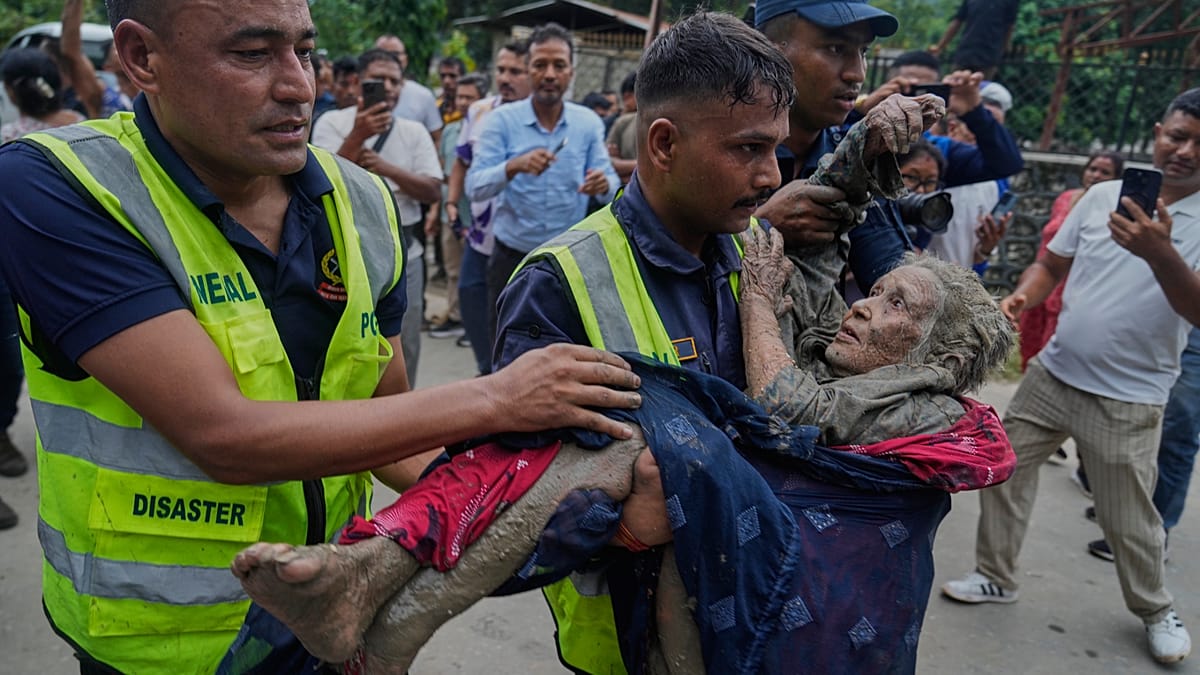
Over 30 bridges collapsed, 42 kilometers of roads were damaged or simply washed away, and communications were disrupted. Thousands of homes were swept away. More than 359 bodies have been recovered so far, and there are still thousands of locals missing. In addition, more than 644 tourists from 33 countries were reported missing. Security personnel themselves were reported missing.
In China also, at least three people were killed and more than 500 people were reported missing. In both countries, rescue and recovery operations are ongoing.

Bahrabise Bazar, Nepal, before and after the Aug. 26, 2026 flood. Photo via Wikimedia Commons.
What exactly caused the disaster is still unclear, but experts believe a massive avalanche or landslide may have blocked the river, creating a temporary dam that eventually burst. It could have been a glacial lake outburst flood – if confirmed, that would be a warning for the entire Hindu Kush Himalayan region about the growing threat of climate crises.
By 3:30 p.m. on Wednesday, the Bhotekoshi River had receded and returned to its original size. But that only made clear the devastation it had wreaked throughout the morning. There was not a trace left of the villages, market towns, bridges, or hydroelectric projects that had once stood along the riverbanks. It is estimated that in one morning the Bhotekoshi washed away over 200 billion rupees worth of investment: roads and bridges were devastated, and neither the hydropower projects nor the transmission lines survived. This is worrisome for a small economy like Nepal.
The Nepal government has declared Rasuwa, Nuwakot, and Dhading districts as disaster crisis zones for the next three months.
While the initial flood has passed, there are still worrying signs coming from China. China’s Ministry of Water Resources warned that a 2 million cubic meter lake near the Chhochen Khola-Purepu Tsangpo confluence is already overflowing, with another 3 million cubic meters expected to flow in, posing a high risk of breach. That could cause a second flood at any time.
Wednesday’s disaster marked the second time in just over a year that Nepal’s Rasuwa district has been devastated by a catastrophic flood, and once again, the disaster didn’t start within its borders. In July 2025, a similar flood in the same region wiped out the Rasuwagadhi border corridor. Satellite images later showed that a glacial lake in Tibet had drained suddenly. At least 11 people were killed in the 2025 flood, which also destroyed bridges, damaged energy infrastructure, and disrupted cross-border trade with China.
Now, just 13 months later, history has repeated itself. That’s not a coincidence.
Professor Ranjan Kumar Dahal of Tribhuvan University said that this is the largest ice tsunami in the last 50 years – not just in Nepal, but across the entire Himalayan region. Whether this turns out to be a glacial lake outburst flood, a landslide-triggered flood, or a mix of both, one thing is clear: the danger is growing, and the damage won’t be limited to any one country.
The devastating flood on Nepal’s Bhotekoshi River was the result of a “massive geological event” in the Himalayas. As per Goran Ekstrom, a geophysicist at Columbia University’s Lamont-Doherty Earth Observatory, the event was triggered by a catastrophic chain of occurrences in the Himalayan region.
Nepal’s area of the Himalayas holds an estimated 2,069 to 2,174 glacial lakes. According to the International Center for Integrated Mountain Development (ICIMOD), 47 of these are classified as potentially dangerous glacial lakes, capable of triggering catastrophic outburst floods. Among these 47 glacial lakes, 21 lie within Nepal, while 25 are transboundary lakes in Tibet, sitting right at the headwaters of rivers that flow south into Nepal. If any of the lakes, whether in Tibet or Nepal, cause an outburst flood, this will harm the people and infrastructure of Nepal living downstream.
Across the Hindu Kush Himalaya, rising temperatures are reshaping the frozen landscape. Glaciers are shrinking, lakes are swelling, and mountain slopes are growing more unstable. The ICIMOD has repeatedly warned that glacier-related disasters are becoming more frequent and more complex.
Experts can’t yet say with perfect confidence that climate change directly caused this week’s flood. But it is changing the rules of the game. The new reality isn’t just about more floods, but about cascading threats. Melting ice, unstable terrain, landslides, river blockages, sudden lake releases, and extreme weather can all combine in unpredictable ways. Conventional weather monitoring downstream just isn’t enough anymore.
This can’t be seen as a matter of the environment but also a matter of national security. The affected corridor is at once a lifeline for communities, a trade artery, an energy source, and a strategic border zone.
There is growing hope for positive change in Nepal’s disaster response. Both Prime Minister Balendra Shah and Physical Infrastructure Minister Sunil Lamsal have backgrounds in structural engineering, and Home Minister Sudan Gurung has experience in relief work. The country can’t stop every Himalayan disaster, but the government can make sure fewer people are caught standing by the river when the mountain unleashes its fury. The real challenge is anticipating these events before they strike.
This is not a problem Nepal can solve on its own. The Bhotekoshi River begins in Tibet and flows into Nepal. A hazard born on the Chinese side can become a national emergency in Nepal within hours. Nepal’s ability to prepare depends almost entirely on getting timely information from across the border.
Likewise, there are millions of people living downstream on the same rivers in both Nepal and India. If a glacial lake bursts in Tibet or Nepal, it will also impact and cause severe harm in India too. So this has also become an urgent cross-border problem. The countries from the Hindu Kush Himalayan region must work together to combat this kind of disaster in a timely manner before it becomes too late. Climate diplomacy in the Himalayas can’t just be about emissions and funding anymore. It has to include real-time data sharing, satellite surveillance of risky glacial and landslide-dammed lakes, joint risk assessments, and rapid cross-border early warning systems.
For Nepal, this is the worst natural disaster since the 2015 earthquake. Despite contributing less than 0.1 percent of global greenhouse gas emissions, Nepal is facing disproportionate environmental and economic consequences. Big neighbors like India and China and partner countries must help Nepal in every possible way. The 2025 flood was a wake-up call. The 2026 flood is a blunt reminder that it wasn’t a one-off.
The message is becoming painfully clear: resilience cannot simply mean rebuilding what the river takes away. It means knowing what is happening upstream before the water arrives. Climate change is real and not a hoax, and Nepal cannot face these growing risks alone. Stronger regional cooperation, shared technology, and global support are important and necessary parts of the response to this tragedy.



















 English (US) ·
  French (CA) ·
  French (FR) ·