

 1 month ago
15
1 month ago
15
PROTECT YOURSELF with Orgo-Life® QUANTUM TECHNOLOGY
Orgo-Life the new way to the future Advertising by Adpathway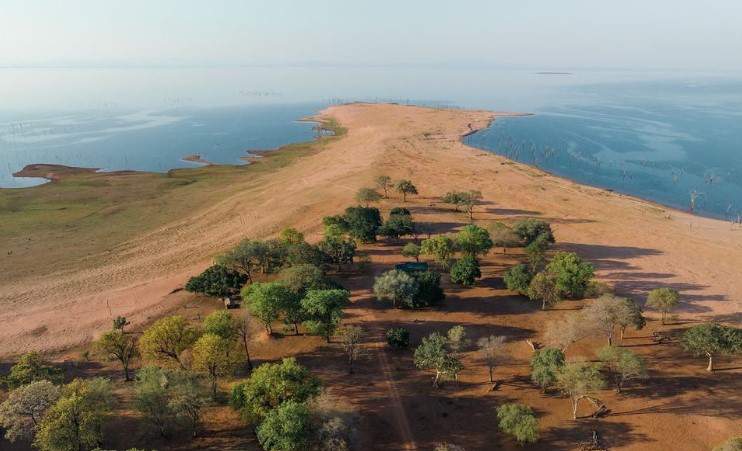
An aerial view of the Matusadona National Park in Zimbabwe, which is bordered by Lake Kariba. The reserve, partly funded by the foundation of Swiss billionaire Hansjeorg Wyss, is run by African Parks, a continent-wide conservation nonprofit.
Matusadona National Park/Instagram
- For more financial news, go to News24 Business.
Black rhinos are being reintroduced into a billionaire-backed national park in Zimbabwe’s Zambezi Valley three decades after almost all of them were evacuated to protect them from poachers.
The number of black rhinos in the valley fell to 400 in the early 1990s from about 3 500 a decade prior because of a surge in illegal hunters crossing from Zambia who targeted the critically endangered species for their horns. The animals that survived were moved to safer areas in Zimbabwe, Texas and Australia.
Their rescue spawned the national Save the Rhino campaign, which included the release of the song “Run Rhino Run.” Paramilitary police forces and the airforce were deployed alongside rangers with a “shoot-to-kill” mandate that killed dozens of poachers, but even that failed to stem the eradication of the rhinos.
In recent days, 17 black rhinos were flown into the Matusadona National Park, the park’s manager said. The reserve, partly funded by the foundation of Swiss billionaire Hansjeorg Wyss, is run by African Parks, a continent-wide conservation nonprofit.
The ancestors of some of the newly arrived black rhinos used to live in Matusadona. “This is an incredible closing of a circle that was 30 years in the making,” said Michael Pelham, who manages the park and worked on the evacuation in the 1990s. “I helped capture the last survivors, we crated then and flew them out to safety, not knowing if the species would ever come back.”
This year’s effort to return black rhinos from other reserves in Zimbabwe is the first step in reestablishing a population in Matusadona, Pelham said. Another 20 will be introduced next year. They will be kept in enclosures for a few weeks until they have acclimatized.
While poaching is still a threat, there are now more rangers in the park and it was selected because its topography makes it relatively easy to monitor for incursions using new technology such as drones and infrared sensors. A lake shore borders one section while a steep escarpment borders another.
There are currently just under 7 000 black rhinos globally, according to the International Rhino Foundation. About 800 of them are in other parts of Zimbabwe and the rest are mainly spread across neighbouring Southern African nations.
African Parks was founded in 2000 and runs 24 parks across the continent in partnership with governments.
The organisation has an annual budget of more than $160 million (R2.6 billion) and in addition to Wyss, who is worth $9.9 billion, its parks and projects are funded by the European Union, conservation organisations and billionaires including Rob Walton and Howard G. Buffett.





















 English (US) ·
  French (CA) ·
  French (FR) ·