

.png) 2 hours ago
9
2 hours ago
9
PROTECT YOURSELF with Orgo-Life® QUANTUM TECHNOLOGY
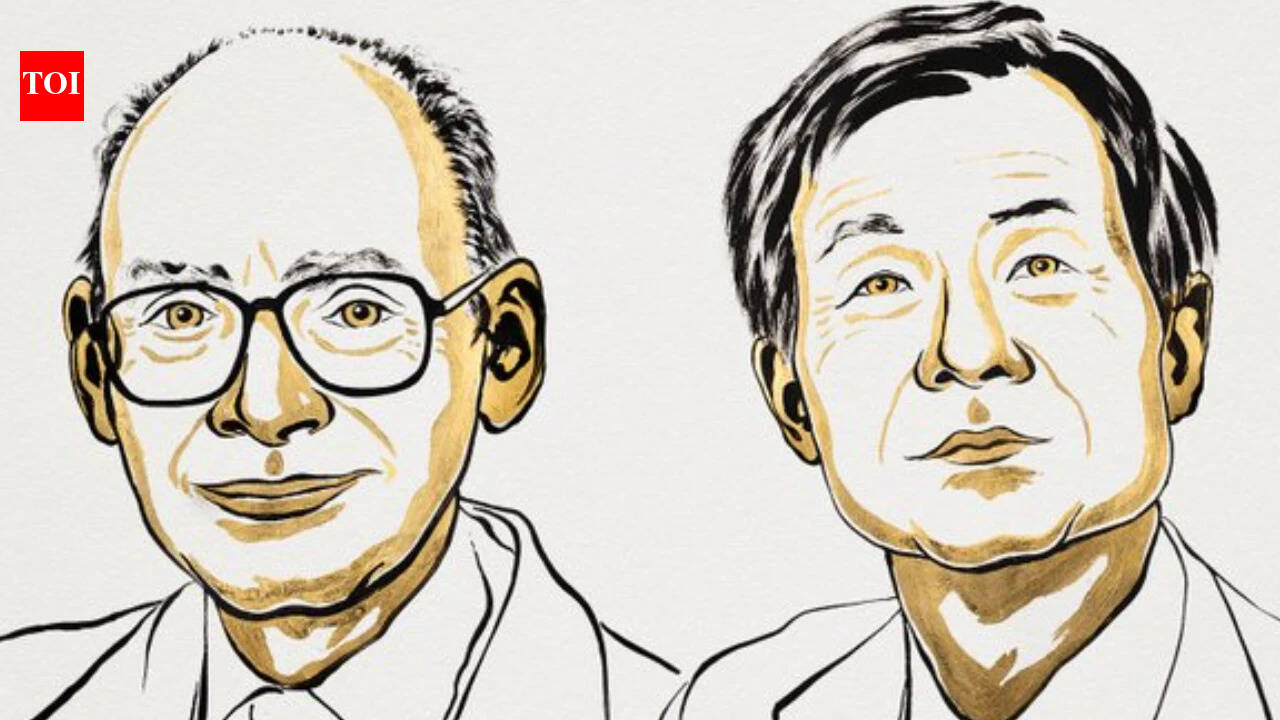
Orgo-Life the new way to the future Advertising by AdpathwayThe Royal Swedish Academy of Sciences has awarded the 2026 Nobel Prize in Chemistry to Henri B Kagan and Kenso Soai for their work on non-linear effects and autocatalysis in asymmetric organic synthesis.
The two scientists were recognised “for the discovery of non-linear effects and autocatalysis in asymmetric organic synthesis”.
Their research helped explain how chemical reactions can produce molecules with the same handedness, a property known as homochirality. This is important because many molecules exist in two forms that are mirror images of each other, but living organisms generally use only one of these forms.
How mirror-image molecules work
Some molecules, including amino acids, occur in two forms that are mirror images of each other. These forms are known as enantiomers.
Although both forms can be produced in chemical reactions, life on Earth largely uses only one. For example, the amino acids found in proteins in living cells have one particular orientation, while their mirror-image forms are rarely found in nature.
Chemists have long tried to understand how this chemical asymmetry, or homochirality, emerged.
The word homochirality comes from the Greek words for “same” and “hand”. The concept is similar to human hands: the left and right hands are mirror images but cannot be perfectly superimposed on each other.
Why the discovery matters
When chemists first studied reactions that could produce two mirror-image molecules, they generally obtained equal amounts of both forms. However, producing only one mirror image is important in developing molecules that interact with living organisms, including medicines.
The 2026 Nobel Prize in Chemistry recognises discoveries that have helped scientists control these reactions and produce one mirror image in preference to the other.
Kagan’s breakthrough in 1986
Kagan made the first major breakthrough in 1986 when he discovered a new way to control chemical reactions.
His work showed that it was possible to produce a much greater excess of one mirror-image molecule than scientists had previously thought possible. This provided an important step towards understanding how chemical reactions could favour one form over another.
Soai’s work leads to homochiral reaction
Soai built on this work with a key development in 1995. He designed a chemical reaction that had the potential to produce molecules with only one handedness.
In 2003, he succeeded in achieving this goal. He demonstrated a reaction in which only one of the two possible mirror-image molecules was produced.
“Henri Kagan and Kenso Soai have provided a solution to a chemical mystery that is over a century old: how homochirality can emerge spontaneously. The chemical reactions they have developed are spectacular,” said Heiner Linke, chair of the Nobel Committee for Chemistry.

















 English (US) ·
  French (CA) ·
  French (FR) ·