

 2 hours ago
5
2 hours ago
5
PROTECT YOURSELF with Orgo-Life® QUANTUM TECHNOLOGY
Orgo-Life the new way to the future Advertising by AdpathwayWho are the bookies’ favourites?
Ella Creamer
Canadian poet Anne Carson and Chinese experimental writer Can Xue are the bookies’ favourites this year, with Ladbrokes listing their odds of taking the top gong at 10/1 each.
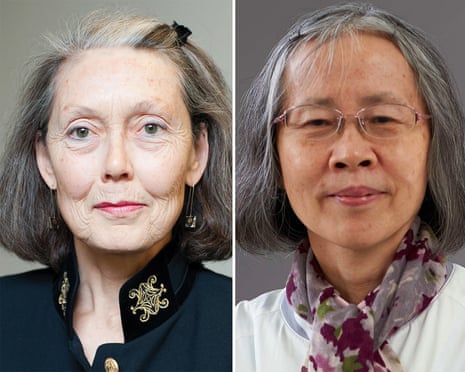
Just behind them are Haruki Murakami (14/1), Gerald Murnane (16/1) and Thomas Pynchon (16/1). At longer odds are Salman Rushdie, Margaret Atwood and Jamaica Kincaid. But could the Swedish Academy surprise us?
Browse a full breakdown of the odds here.
Key events

Emma Loffhagen
Possible contender: Salman Rushdie
Salman Rushdie’s name is often thrown into the mix of potential Nobel winners – a familiar figure on a list that can often skew towards the esoteric. His fiction, which blends history, myth, politics and magical realism, has made him one of the most internationally influential writers of his generation.
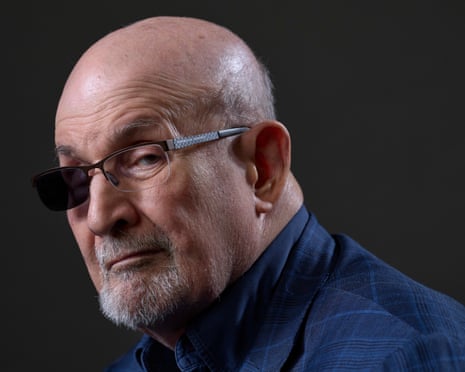
Born in Bombay (now Mumbai) in 1947, Rushdie moved to Britain as a teenager. He broke through with his second novel, Midnight’s Children, published in 1981, which won the Booker prize. The publication of his 1988 novel The Satanic Verses provoked Iran’s Ayatollah Ruhollah Khomeini to issue a fatwa calling for Rushdie’s death over its depiction of Islam. (The Swedish Academy famously refused to issue a formal condemnation of the fatwa, prompting three members to quit in protest – it wasn’t until 2016 that they explicitly condemned it).
In 2022, Rushdie was attacked on stage in New York, causing him to lose sight in one eye. He subsequently wrote Knife: Meditations After an Attempted Murder, a memoir about the attack and its aftermath. Earlier this month, a documentary about Rushdie’s life up to and after the attack was released.
Rushdie has written 15 fiction books, and his work has been translated into more than 40 languages. He has received numerous international literary awards and recognition for his work, including a knighthood.
Ella Creamer
The indie press with four Nobels to its name
London-based Fitzcarraldo Editions has seriously punched above its weight since launching in 2014.
Its first Nobel coup came in 2015, with Belarusian writer Svetlana Alexievich. Fitzcarraldo had bought English-language rights for her book Second-hand Time just the year before.
Its second was Olga Tokarczuk, the 2018 laureate. Fitzcarraldo had published English translations of her novels Flights and Drive Your Plow Over the Bones of the Dead before she was announced winner.
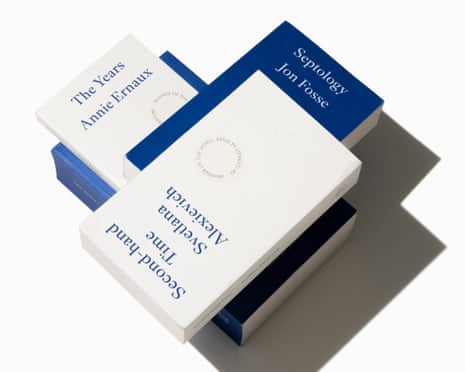
The third win was Annie Ernaux in 2022. Fitzcarraldo published six of her books before the win, and has gone on to release 14 works by the French writer in total, including her most famous memoir, The Years, spanning 1941 to 2006.
A second consecutive win arrived when Jon Fosse, best known for his seven-part novel Septology, was announced as the 2023 laureate.
It also added the 2004 laureate Elfriede Jelinek to its catalogue in 2021, publishing Rein Gold, originally written as a libretto for the Berlin State Opera.
The publisher even sells a “Nobel Prize Essentials” pack of four titles. Quite the flex.
Molly Bennett
Possible contender: Anne Carson
One of this year’s frontrunners is Anne Carson. Born in 1950 in Toronto, Canada, Carson is a poet, essayist, translator and was a professor of classics. Her writing often crosses genres, combining poetry with prose.
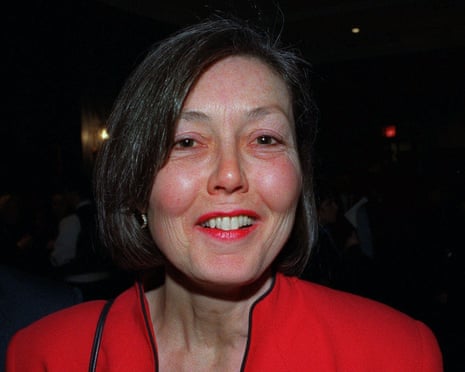
After completing her doctorate in classics, she taught at a number of universities while literary magazines started to publish her work. Her major breakthrough came in 1998 with her verse novel Autobiography of Red, a queer coming-of-age story, blending Greek myth with a contemporary plot. She has published more than 20 books of poetry, essays and translations.
In 2001, she was the first woman to ever win the TS Eliot prize for her collection The Beauty of the Husband. She has also been awarded Guggenheim and MacArthur fellowships.
Ella Creamer
Doris Lessing’s reaction to winning the Nobel in 2007 never gets old …
How is the Nobel chosen?

Philip Oltermann
The 18 life members of the Swedish Academy who decide the Nobel prize in literature are often referred to simply as The Eighteen, evoking an idea of some ancient council of tunic-wearing, white-bearded men gathering on the top of a hill. It makes it easy to forget that these are living, breathing people with real jobs: literary historians, lawyers, linguists and journalists. These days, almost half (seven) of them are female, and one of them (linguist David Stefan Håkansson) is even under 50.
The Academy’s first permanent secretary under which the prize was awarded, Carl David af Wirsén, saw the prize’s mission as crowning “the great men of continental [European] literature”, but its members have been looking beyond the west since the 1980s.
Picking the winner of the Nobel prize in literature is a year-long process. In September of the previous year, hundreds of eligible individuals and organisations are invited to submit nominations. These include professors of literature and linguistics at universities and colleges, previous Nobel laureates in literature and the heads of writers’ associations. Nobody can nominate themselves.
In spring, a Nobel Committee of four or five academicians then whittles down the nominations to a highly confidential shortlist of five, which it presents to the Academy. The Academy spends the summer reading and decides in early October.
The Eighteen’s criteria are not made public, but changes in its line-up can have real consequences on voting tendencies. One reason why Swedish observers are tipping for a poet Nobel winner this year, for example, is that its newest member is herself one. Anna Hallberg, who was elected as a new member in May 2026, has published nine collections of verse and has been hailed by the Academy as “one of the most uncompromisingly innovative and form-conscious voices in contemporary Swedish poetry”.
Molly Bennett
Possible contender: Can Xue
The bookies’ joint favourite to win, along with Anne Carson, is Can Xue, a 73-year-old Chinese author known for her experimental prose and stream of consciousness, dreamlike style. She is often listed as a favourite to win.
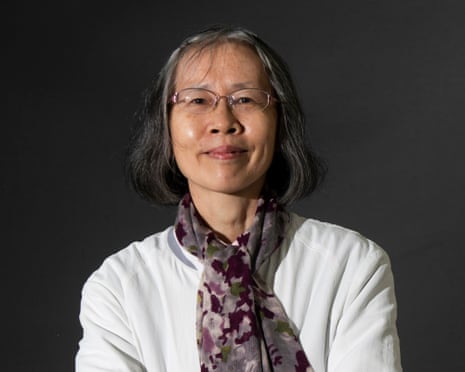
Can Xue (whose real name is Deng Xiaohua) was born in Cangsha City in 1953, meaning she grew up during China’s Cultural Revolution. Her parents were sentenced to manual labour in the countryside, and Can Xue was unable to finish her education. Can Xue writes about her turbulent childhood in a foreword to her short story collection Dialogues in Paradise. Her works are inspired by Western writers such as Kafka, Tolstoy and Shakespeare.
She has been longlisted for the International Booker Prize twice, first in 2019 for Love in the New Millennium and again in 2021 for I Live in the Slums.
Might this year finally be her year?
Who are the bookies’ favourites?
Ella Creamer
Canadian poet Anne Carson and Chinese experimental writer Can Xue are the bookies’ favourites this year, with Ladbrokes listing their odds of taking the top gong at 10/1 each.
Just behind them are Haruki Murakami (14/1), Gerald Murnane (16/1) and Thomas Pynchon (16/1). At longer odds are Salman Rushdie, Margaret Atwood and Jamaica Kincaid. But could the Swedish Academy surprise us?
Browse a full breakdown of the odds here.
Last year’s winner: László Krasznahorkai
Emma Loffhagen
Last year’s Nobel prize in Literature went to László Krasznahorkai, the 72-year-old Hungarian novelist known for his dystopic, melancholy prose, praised by the Swedish academy for a “compelling and visionary oeuvre that, in the midst of apocalyptic terror, reaffirms the power of art”.
Krasznahorkai was born in Gyula, Hungary, in 1954 and established his reputation with his first novel, Satantango, published in 1985. Set in a deteriorating rural community, the novel was later translated into English and, in 2015, won the Man Booker International prize. It also became the basis for Béla Tarr’s celebrated seven-hour film adaptation.
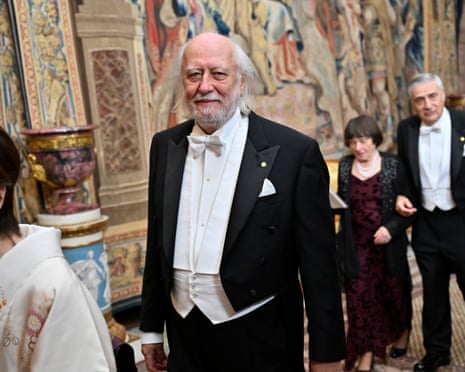
His fiction is characterised by its extraordinarily long sentences and sustained intensity (Satantango is divided into 12 chapters, each comprising a single paragraph). His work has prompted comparisons with writers including Nikolai Gogol, Herman Melville and Franz Kafka.
Travel has been a recurring influence on Krasznahorkai’s writing. He left Communist Hungary for the first time in 1987, when he spent a year in West Berlin as a DAAD fellow. Later journeys through East Asia, particularly Mongolia and China, informed books including The Prisoner of Urga and Destruction and Sorrow Beneath the Heavens.
While Krasznahorkai was writing War and War, he travelled extensively around Europe and also spent a period living in Allen Ginsberg’s New York apartment – the Beat poet extensively advised Krasznahorkai on the novel’s construction.
Susan Sontag once described the author as “the contemporary Hungarian master of apocalypse”, WG Sebald praised the universality of his vision, and the literary critic James Wood wrote that his books “get passed around like rare currency”.
Welcome to the Nobel literature prize live blog
Ella Creamer
The most-awaited day in the literary calendar has arrived: at lunchtime, the Nobel prize in literature will be announced. We’ll be sharing commentary and predictions by Europe culture editor Philip Oltermann, Guardian books writer Emma Loffhagen, freelance writer Molly Bennett and myself.
This year’s recipient is set to be announced at around 1pm CEST, or midday in the UK. Could it be perennial bookies’ favourite Can Xue, the avant garde Chinese writer? How about the Canadian poet Anne Carson, or prolific Argentine novelist César Aira? All will be revealed.












 English (US) ·
  French (CA) ·
  French (FR) ·