

 2 months ago
82
2 months ago
82
PROTECT YOURSELF with Orgo-Life® QUANTUM TECHNOLOGY
Orgo-Life the new way to the future Advertising by Adpathway5 min readNew DelhiMay 25, 2026 03:30 PM IST
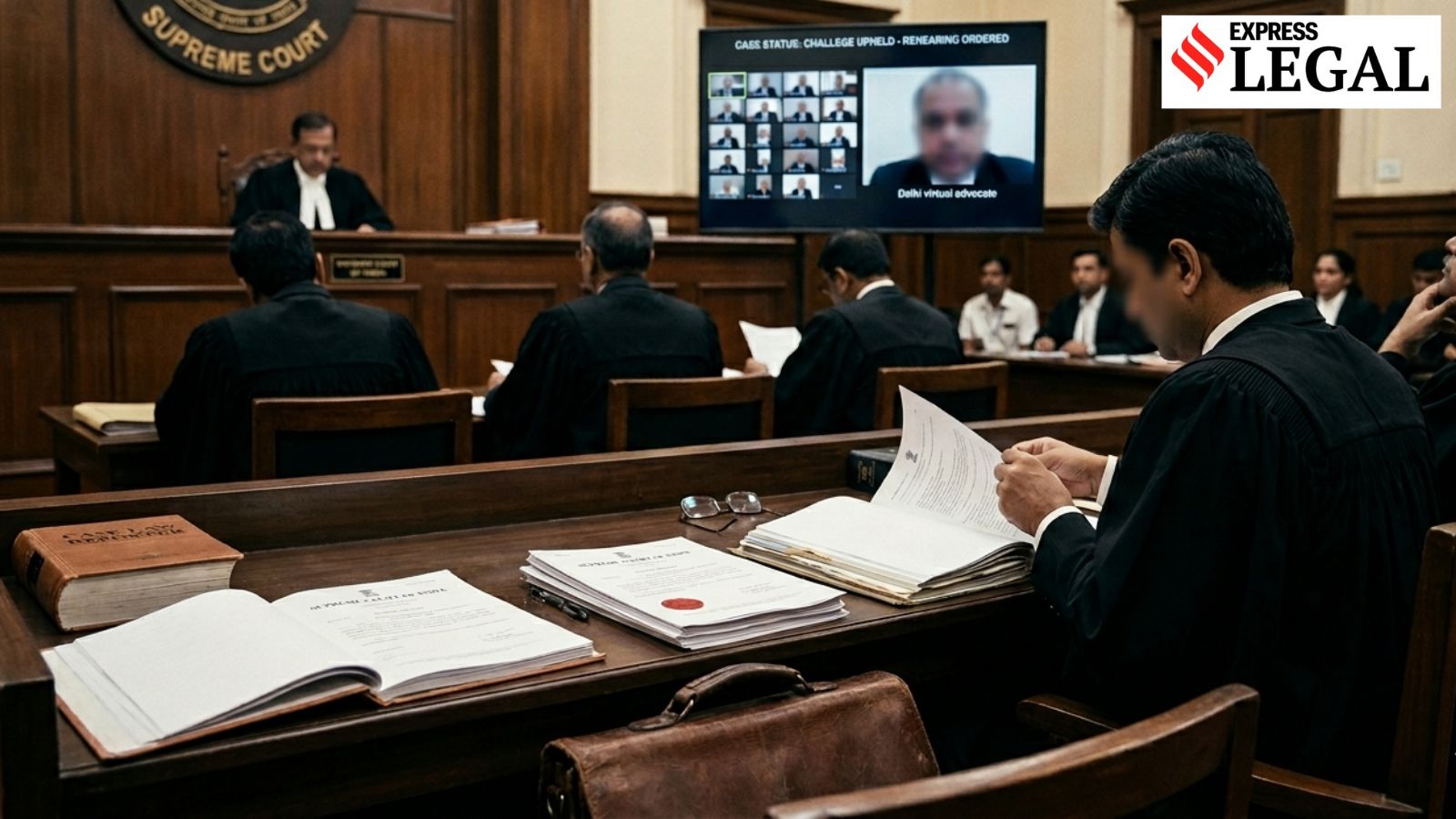 Without entering into the merits of the dispute between the parties, the bench concluded that the matter deserved reconsideration by the high court through a proper hearing. (AI-generated image)
Supreme Court news: The Supreme Court has set aside a high court order that refused to examine a matter on merits after finding that the counsel appearing in person was not ready to argue the case and that the advocate joining virtually from Delhi had not been properly instructed.
The top court also quashed the Rs 10,000 costs imposed on the appellant and directed the high court to hear the matter afresh on the merits.
A bench of Justices Prashant Kumar Mishra and N V Anjaria was hearing a civil appeal arising out of a special leave petition (SLP) filed by one Anil Kumar Rai against the Union of India and others.
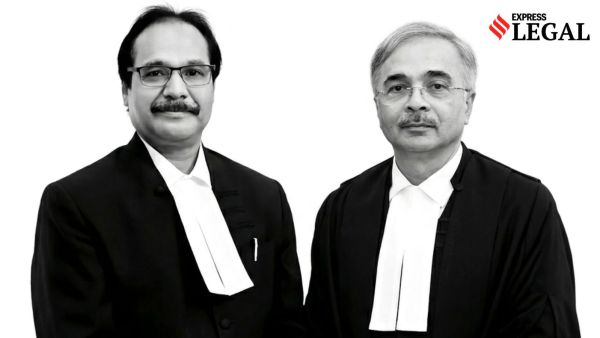 Justices Prashant Kumar Mishra and N V Anjaria were hearing a civil appeal arising out of a special leave petition filed by one Anil Kumar Rai.
“On due consideration and in the interest of justice, we set aside the impugned order and remit the matters back to the High Court for deciding the same on its own merits,” the Supreme Court bench said on May 20, allowing the appeals.
Supreme Court intervenes ‘in interest of justice’
- After hearing the parties, the Supreme Court found that the ends of justice required interference with the impugned order.
- Without entering into the merits of the underlying dispute between the parties, the bench concluded that the matter deserved reconsideration by the high court through a proper hearing on merits.
- The court accordingly set aside the high court’s order and remitted the proceedings back for fresh adjudication.
- The top court directed that the high court would now decide the matter independently on its own merits in accordance with law.
- The Supreme Court then disposed of both civil appeals and also ordered closure of all pending applications connected with the matter.
Dispute before Supreme Court
- The case before the Supreme Court stemmed from an order of the high court which had declined to adjudicate the matter on the merits.
- The high court had recorded that the counsel physically appearing before it was not prepared to conduct the case.
- It had also observed that the counsel who appeared virtually from Delhi was not instructed by the counsel physically present in court.
- Instead of deciding the controversy on the merits, the high court chose not to entertain the matter and imposed costs of Rs 10,000 upon the appellant.
- Following this, the appellant moved the Supreme Court, challenging the correctness of the approach adopted by the high court.
- The matter was taken up by the apex court in its civil appellate jurisdiction after leave was granted in the special leave petitions.
- According to the record of proceedings, Dr Vikash Kumar appeared on behalf of the appellant along with Advocate-on-Record Ashutosh Kumar Shukla, while Kaustubh Anshuraj represented the respondents before the Supreme Court.
Significance
Though brief, the order underscores the Supreme Court’s consistent view that procedural lapses or lack of preparedness on the part of counsel should not ordinarily defeat a litigant’s opportunity to have a case adjudicated on merits.
The ruling also reflects the court’s emphasis that adjudicatory forums should lean in favour of substantive justice rather than shutting out proceedings on technical or procedural grounds, particularly where a party may otherwise lose the opportunity of an effective hearing.
The order gains significance in the context of increasing hybrid hearings where courts frequently deal with situations involving both physical and virtual appearances by advocates. The Supreme Court’s intervention indicates that communication gaps or logistical difficulties between lawyers appearing in different modes should not become a reason to non-suit litigants without consideration of the merits of their case.
Story continues below this ad
3 bail pleas in 10 months: Lawyer fined Rs 2,000
On April 27, the Allahabad High Court imposed a cost of Rs 2,000 on an advocate for filing three successive bail applications within short intervals in a case registered under the Protection of Children from Sexual Offences (POCSO) Act, 2012.
Justice Krishan Pahal, while rejecting the bail plea, noted that the filing of three successive bail applications appeared to indicate bench hunting or forum shopping by the counsel.
“This Court observes that the filing of three successive bail applications; the first rejected on 01.05.2025, the second rejected on 17.10.2025, and the instant third filed on 26.02.2026 evinces a gap indicative of bench hunting or forum shopping by counsel for the applicant,” the court remarked in its order dated April 27.
The court also deprecated the conduct of the accused in seeking an adjournment when the court started pronouncing its order after the completion of arguments. “After completion of arguments, when the Court started pronouncing its order, the counsel for the applicant sought an adjournment. The attitude shown by counsel during the hearing of this bail application is deprecated. While such conduct warrants contempt proceedings, this Court refrains therefrom and instead imposes costs of Rs 2,000,” it ordered.

Vineet Upadhyay is an Assistant Editor with The Indian Express, where he leads specialized coverage of the Indian judicial system. Expertise Specialized Legal Authority: Vineet has spent the better part of his career analyzing the intricacies of the law. His expertise lies in "demystifying" judgments from the Supreme Court of India, various High Courts, and District Courts. His reporting covers a vast spectrum of legal issues, including: Constitutional & Civil Rights: Reporting on landmark rulings regarding privacy, equality, and state accountability. Criminal Justice & Enforcement: Detailed coverage of high-profile cases involving the Enforcement Directorate (ED), NIA, and POCSO matters. Consumer Rights & Environmental Law: Authoritative pieces on medical negligence compensation, environmental protection (such as the "living person" status of rivers), and labor rights. Over a Decade of Professional Experience: Prior to joining The Indian Express, he served as a Principal Correspondent/Legal Reporter for The Times of India and held significant roles at The New Indian Express. His tenure has seen him report from critical legal hubs, including Delhi and Uttarakhand. ... Read More
© IE Online Media Services Pvt Ltd















 English (US) ·
  French (CA) ·
  French (FR) ·