

 4 hours ago
5
4 hours ago
5
PROTECT YOURSELF with Orgo-Life® QUANTUM TECHNOLOGY
Orgo-Life the new way to the future Advertising by AdpathwaySOUTHERN AFRICA · BUSINESS
Key Facts
- —The deal ICTSI has signed an agreement to acquire 100% of TLG Acquisition Holdings, which it describes as an integrated port and cargo-handling services provider. The value was not disclosed; the sellers bought the business in 2022 for US$110 million.
- —Who is selling ICTSI is buying 74% from the fund manager African Infrastructure Investment Managers and the remaining 26% from Mokobela Shataki Proprietary Limited, a South African investment company.
- —What TLG does TLG runs cargo-handling and logistics businesses focused on agricultural commodities at several South African ports. It also operates terminals handling mineral and agricultural exports in Mozambique and Namibia.
- —Why it matters The purchase moves ICTSI beyond container terminals into bulk agricultural and mineral cargo along Southern African trade corridors. Those are the corridors that carry the region’s mineral exports.
- —Already on the ground ICTSI has operated Pier 2 of the Durban Container Terminal since 1 January 2026 under a 25-year partnership with Transnet, which holds the majority of the joint venture. It also operates terminals at Onne in Nigeria, Kribi in Cameroon, Matadi in the Democratic Republic of Congo and in Madagascar.
- —The buyer’s finances ICTSI posted first-half 2026 net income of US$589.98 million, up 22% year on year. Revenue rose 27% to US$1.92 billion.
- —Not yet closed The transaction remains subject to customary closing conditions, including regulatory approvals. No completion date has been published.
The ICTSI TLG acquisition will give the Philippine port operator full ownership of a cargo-handling group working across South Africa, Mozambique and Namibia. International Container Terminal Services Inc. disclosed the agreement to the Philippine Stock Exchange on Friday 28 August, without giving a price.
One-stop reference
Company Intelligence
Every listed company in Latin America — financials, ownership and structure for 1,450+ companies across 26 exchanges, in one place.
What the ICTSI TLG acquisition actually buys
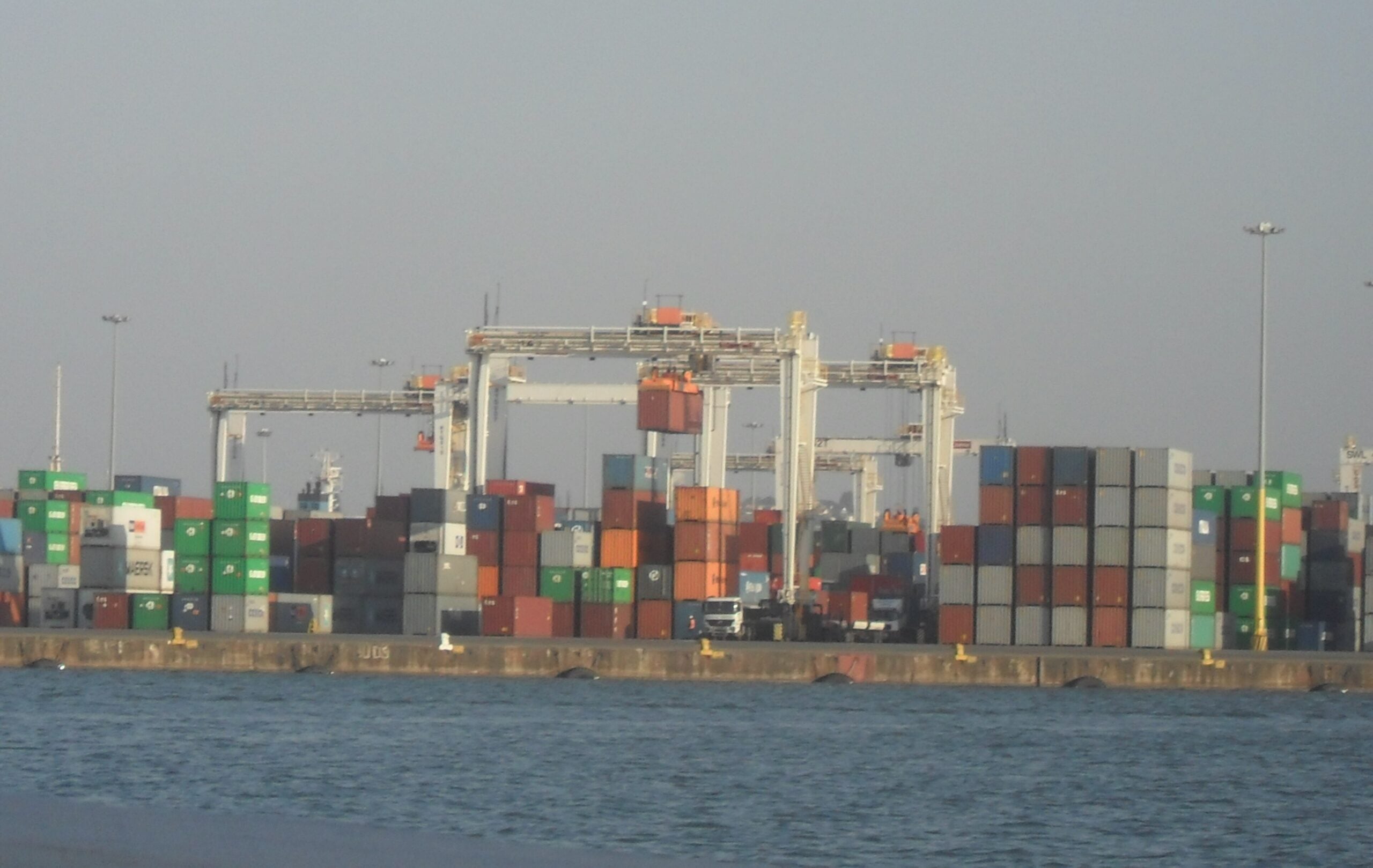
ICTSI describes TLG as an integrated port and cargo-handling services provider operating in Mozambique, Namibia and South Africa. Its seller describes it as an integrated logistics company spanning port operations, rail, warehousing and transport logistics, with terminals at Cape Town, Port Elizabeth and Durban.
Neither side has named the individual terminals covered by the sale.
That is the point of the deal. ICTSI is a container-terminal operator by history, and bulk handling is a different business with different customers and a different cost structure.
The three countries involved sit on the export corridors that carry Southern African minerals to sea. Namibia’s Walvis Bay and Mozambique’s Maputo and Beira are the alternatives whenever South African rail and ports fall short.
ICTSI has not disclosed what it is paying. Nor has it said when the deal is expected to close, beyond noting the usual regulatory approvals.
Who is buying, and who is selling
ICTSI is listed on the Philippine Stock Exchange and controlled by the Philippine billionaire Enrique K. Razon Jr., its chairman and president.
The buyer is the listed company, not Razon personally. It posted first-half 2026 net income of US$589.98 million, up 22% on the same period a year earlier, on revenue up 27% to US$1.92 billion.
The seller of the 74% stake is African Infrastructure Investment Managers, a fund manager that has been one of the more active infrastructure investors on the continent. The remaining 26% comes from Mokobela Shataki, a South African investment company.
A fund manager selling is not in itself a verdict on the asset. Infrastructure funds have finite lives and exit on a schedule, and a trade buyer with operating experience is the natural counterparty.
The Durban foothold that came first
Southern Africa is not new ground for ICTSI. Since 1 January 2026 it has operated Pier 2 of the Durban Container Terminal under a 25-year partnership with Transnet, South Africa’s state-owned freight and logistics company.
That concession was one of the most closely watched port transactions on the continent, because Durban is the busiest container port in sub-Saharan Africa and its performance has been a persistent constraint on South African trade. Buying TLG extends the same operator into the cargo that moves alongside those containers.
ICTSI already runs four other African terminals: the multipurpose terminal at Onne in Nigeria, the multipurpose terminal at the Kribi deepwater port in Cameroon, Matadi Gateway Terminal in the Democratic Republic of Congo and Madagascar International Container Terminal.
Matadi matters for the same reason the corridors do. It is the Congolese river port through which a share of the country’s trade reaches the Atlantic.
Why a Manila operator, and not a European one
The identity of the buyer is the part worth pausing on. African port assets have historically changed hands between European operators, Gulf groups and, more recently, Chinese state-linked companies.
ICTSI belongs to none of those blocs. It is a listed emerging-market operator expanding on its own balance sheet at a moment when several of the incumbents are retrenching.
Readers of this publication have seen the same company on the other side of the Atlantic. In July it agreed to buy two dry-bulk terminal concessions at the Port of Aratu in Bahia from Simpar for R$650 million, about US$130 million, with an earn-out of up to R$100 million.
Including net debt that is an enterprise value of roughly US$353 million. They join a Latin American network that already runs from Mexico to Argentina.
That gives ICTSI something few operators have: terminals on both the South American and African sides of the South Atlantic. The cargo running between them, chiefly grain, fertiliser and minerals, is exactly what TLG handles.
What it means for the region
For South Africa, another experienced private operator inside the port system is broadly consistent with the direction of policy. Transnet has been seeking partners and capital for its rail and port network, and has asked the National Treasury for R35 billion, about US$2.2 billion, to modernise it by 2030.
For Mozambique and Namibia, the arrival of a large listed operator in bulk handling is a vote on corridor volumes rather than on any single terminal. Bulk handling only pays if the minerals and grain keep moving.
The competition review will be the first real test. A single operator holding a container terminal in Durban alongside bulk positions across three neighbouring countries is the kind of concentration regulators examine closely.
ICTSI has not said which competition authorities must clear the deal.
Frequently Asked Questions
What is the ICTSI TLG acquisition?
ICTSI has agreed to acquire 100% of TLG, a cargo-handling and logistics group operating in South Africa, Mozambique and Namibia. The agreement was disclosed to the Philippine Stock Exchange on 28 August.
How much is ICTSI paying?
The value of the transaction was not disclosed. It remains subject to customary closing conditions, including regulatory approvals, and no completion date has been published.
Who is selling TLG?
ICTSI is buying 74% from the fund manager African Infrastructure Investment Managers and the remaining 26% from Mokobela Shataki Proprietary Limited, a South African investment company.
What does ICTSI already operate in Africa?
It has run Pier 2 of the Durban Container Terminal since 1 January 2026 under a 25-year partnership with Transnet. It also operates terminals at Onne in Nigeria, Kribi in Cameroon, Matadi in the Democratic Republic of Congo and in Madagascar.
Why is the deal significant?
It moves ICTSI beyond container terminals into bulk agricultural and mineral cargo handling along Southern African trade corridors. Those corridors carry the region’s mineral and grain exports to sea.
This article was produced by The Rio Times’ automated newsroom system. How we use AI · Report an error
The Rio Times · Power Map
See who really holds power in Latin America
Click to open the Power Map →

















 English (US) ·
  French (CA) ·
  French (FR) ·