

 4 hours ago
3
4 hours ago
3
PROTECT YOURSELF with Orgo-Life® QUANTUM TECHNOLOGY
Orgo-Life the new way to the future Advertising by Adpathway
One-stop reference
Company Intelligence
Every listed company in Latin America — financials, ownership and structure for 1,450+ companies across 26 exchanges, in one place.
BUSINESS · ARGENTINA
Key Facts
- —The country Argentina, in the lithium-rich Puna highlands of Salta province in the far north-west.
- —What happened On 2 October 2026 in Paris, Governor Gustavo Sáenz said Rio Tinto confirmed US$2.7 billion for its Rincón lithium project, El Tribuno and Aries reported.
- —The numbers 50,000 tonnes a year of battery-grade lithium carbonate from two 25,000-tonne lines, the first due in 2028. About 600 permanent jobs in operation, per the same reports.
- —What it means for you Argentina’s lithium output is set to keep rising, adding export dollars. Suppliers and workers in Salta stand to gain most during the 2027 construction peak.
- —Still open Rio Tinto had not published its own update on 2 October. Its March figures differ (US$2.5 billion, about 60,000 tonnes), and 2028 lithium prices are uncertain.
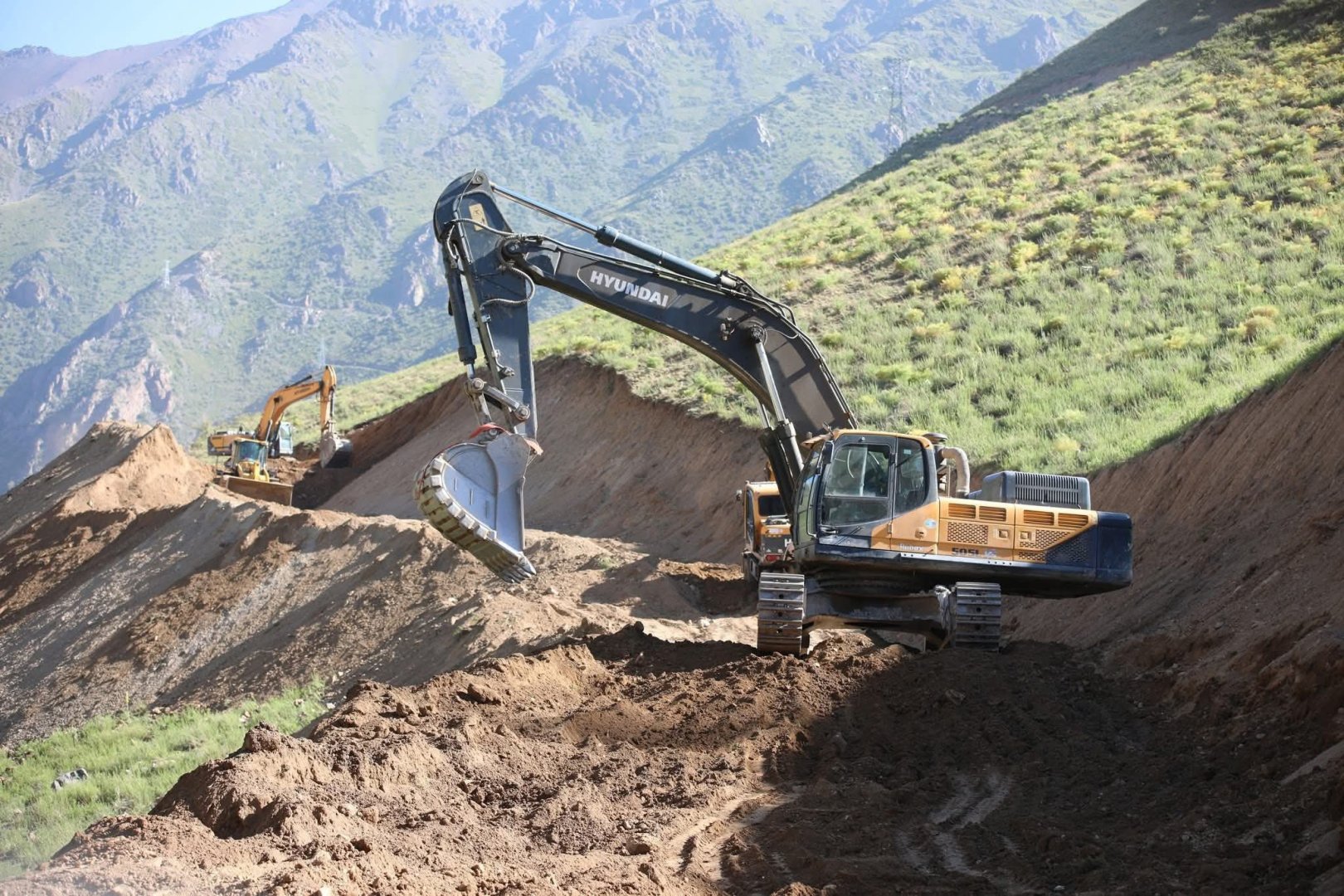
The Rio Tinto lithium project at Rincón, in Argentina’s Salta province, is to cost US$2.7 billion and produce 50,000 tonnes a year. Governor Gustavo Sáenz gave the figures on Friday 2 October after meeting company executives in Paris.
The project is not new, but the meeting set out a clearer timetable and a job count. The first of two production lines is due to start in 2028, El Tribuno and the Salta outlet Aries reported.
What was confirmed in Paris
Sáenz met Jérôme Pécresse, who runs Rio Tinto’s aluminium and lithium business, and business development manager Joey Kairala. The talks took place during Argentina Week, a promotion event in the French capital.
According to both reports, Rincón will make battery-grade lithium carbonate in two lines of 25,000 tonnes each. That chemical is the form of lithium most widely sold to battery makers.
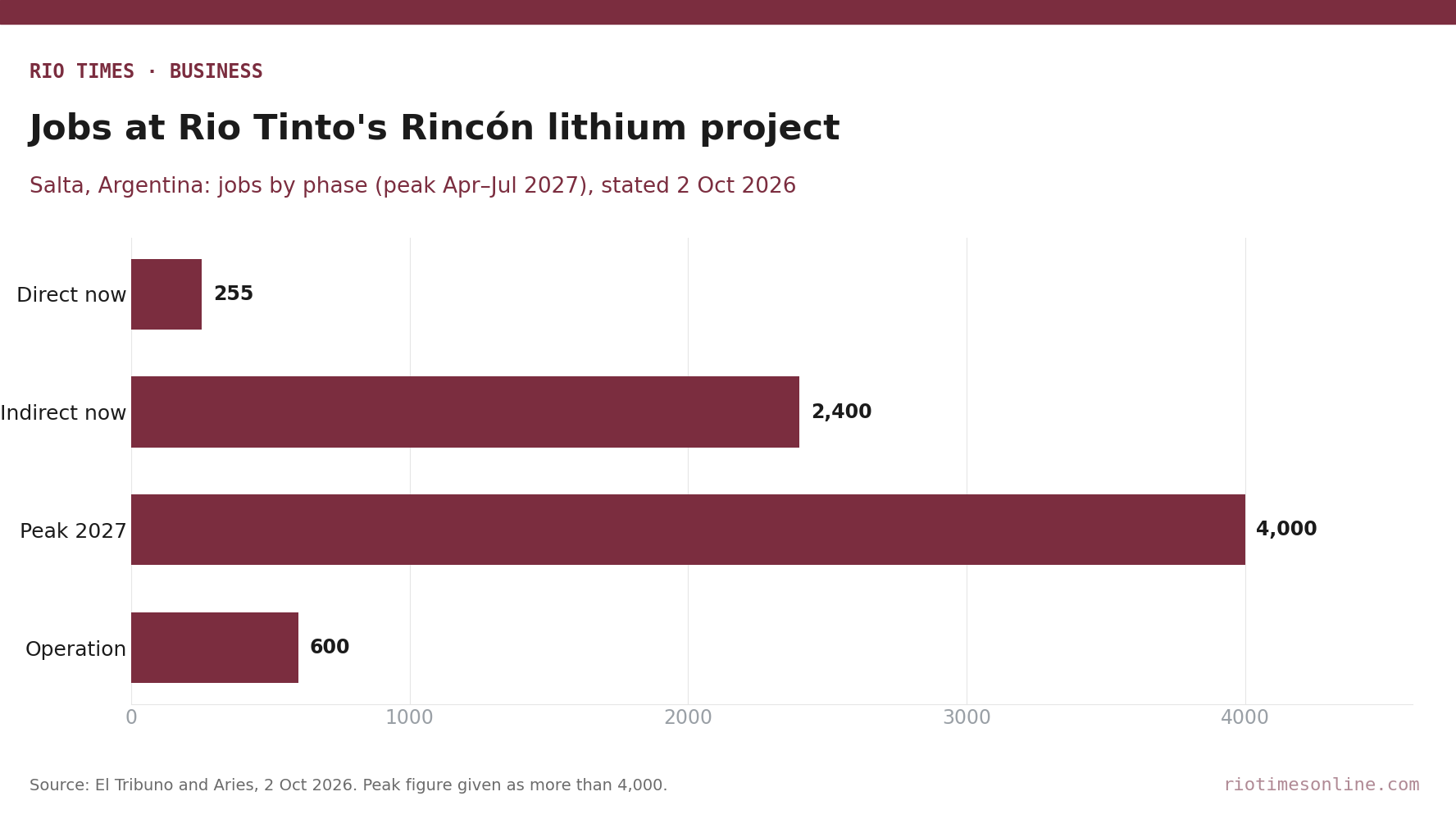
The jobs figures are the main new detail. Construction currently employs 255 people directly and about 2,400 indirectly, the reports said.
Indirect employment is expected to pass 4,000 between April and July 2027. Once running, the plant should employ around 600 people directly.
Follow this story
Get an email when there’s news on Argentina markets
Free. One email a day at most, and only when there is news. This also signs you up to our weekday newsletter, The LatAm Brief. Nothing arrives until you click the confirmation link, and you can stop either with one click. Privacy policy.
How the Rio Tinto lithium plan got here
Rio Tinto agreed to buy Rincón in 2021. In May 2025 it became the first mining project approved under the RIGI, the national incentive scheme for large investments, Cadena 3 reported at the time.
Salta’s mining authority then issued the environmental impact declaration in August 2025, after a public hearing and consultation with Indigenous communities. In March 2026, Reporte Minero said Rincón shipped its first 200 tonnes of lithium carbonate to Shanghai.
Sáenz framed the plan as a test of whether mining reaches local people. “We want each investment to translate into employment, growth of local suppliers, infrastructure and new opportunities,” he said, as quoted by Aries.
Why it matters, and the risks
Salta already hosts several large lithium developments, including Ganfeng’s projects. President Javier Milei took provincial governors to Argentina Week to court investors.
Lithium prices were low when the permit was granted in 2025, LM Neuquén Más Energía noted. A plant starting in 2028 will sell into whatever market exists then.
The stated figures also vary. In March, Rio Tinto put the cost at US$2.5 billion and said it plans to build for about 60,000 tonnes a year.
Salta’s 2025 environmental permit covers 50,000 tonnes, matching Friday’s figure. The US$2.7 billion is the sum approved under the RIGI in 2025.
What Is Not Yet Known
Rio Tinto had not issued its own statement on the Paris meeting by Friday afternoon. The figures so far come from the provincial side, as reported by El Tribuno and Aries.
In March, Rio Tinto secured US$1.175 billion in loans from four lenders, including the International Finance Corporation, the World Bank’s private-sector arm. Whether the new timetable changes that funding plan has not been disclosed.
It is also unclear how many of the 600 permanent jobs will go to Salta residents. Earlier Argentine coverage set out the wider context in Milei Takes Governors to Paris to Trade Deals for an End to Primaries and Argentina Lithium: China’s Ganfeng Locks In a Three-Project Salta Megadevelopment.
Sources: El Tribuno (2 Oct 2026); Aries (2 Oct 2026); Cadena 3 (20 May 2025); LM Neuquén Más Energía (28 Aug 2025); Reporte Minero (10 Mar 2026); Rio Tinto (11 Mar 2026).
This article was produced by The Rio Times’ automated newsroom system. How we use AI · Report an error · Editorial responsibility: Matthias Camenzind, Editor-in-Chief
LatAm Markets: Live Signals → — real-time movers, turnover leaders and FX across Latin America.









 English (US) ·
  French (CA) ·
  French (FR) ·