

PROTECT YOURSELF with Orgo-Life® QUANTUM TECHNOLOGY
Orgo-Life the new way to the future Advertising by Adpathway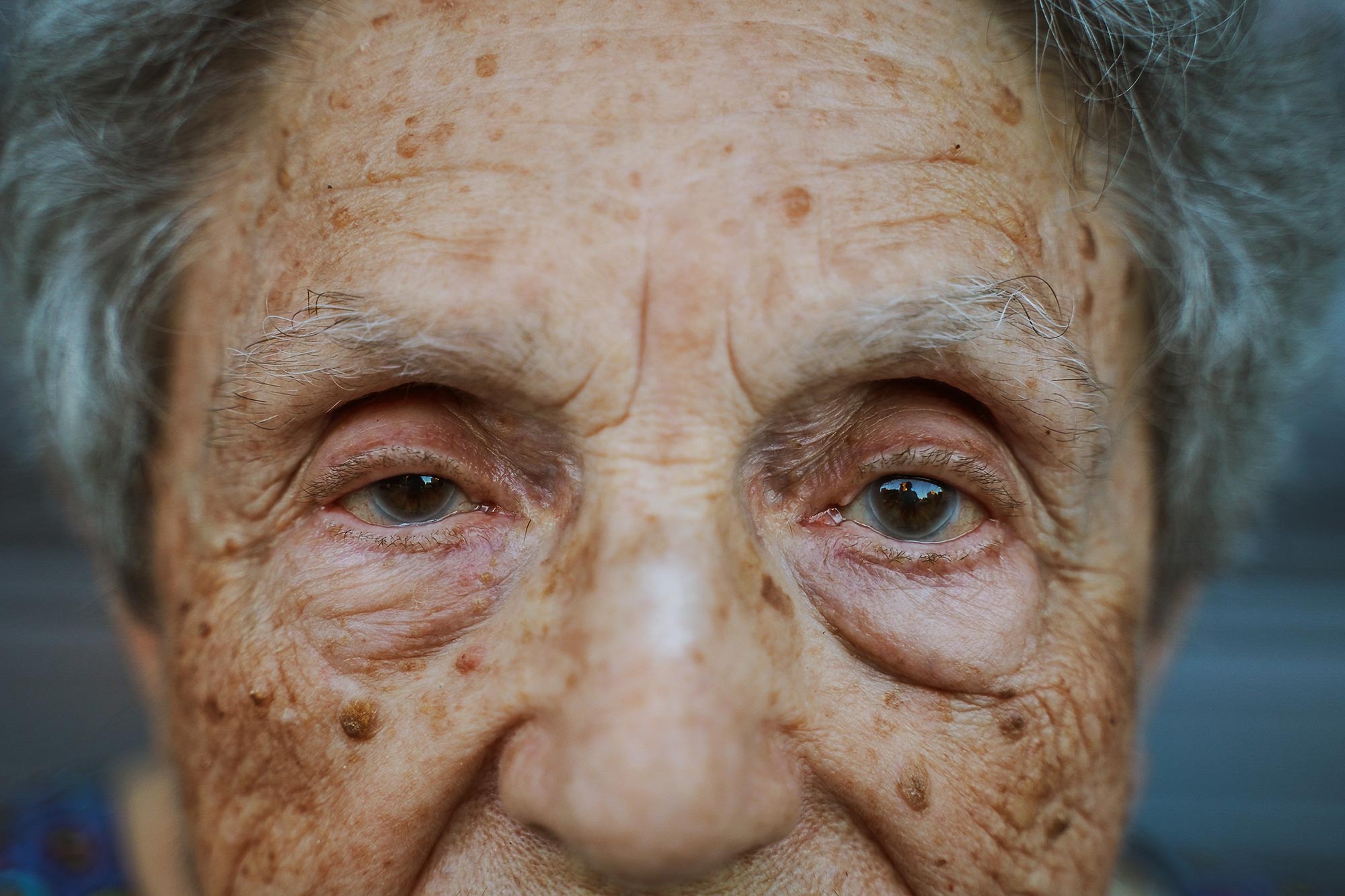 Aging appears to make retinal support cells far less willing to transform into new neurons, complicating efforts to regenerate tissue damaged by diseases such as glaucoma. Credit: Shutterstock
Reducing inflammation partially restored the aging retina’s ability to generate new neurons from support cells, offering a possible route to improve experimental regeneration.
To replace nerve cells lost to glaucoma, researchers are looking to cells already living alongside them. Called glia, these cells support and nourish neurons in the retina, the light-sensitive tissue at the back of the eye. The idea is to give them a different job, turning them into new neurons that could replace those lost to disease.
Scientists have managed to do this in young mice. But an approach intended for diseases of aging also needs to work in older tissue. A study from the laboratory of Levi Todd, PhD, at Upstate Medical University found that aging makes that transformation much harder. It also identified a potential way to help, with anti-inflammatory steroids partially restoring the aging retina’s regenerative response.
Published in the Proceedings of the National Academy of Sciences (PNAS), the study tested several reprogramming strategies based on transcription factors, proteins that help control which genes a cell turns on or off. Across those approaches, glia became substantially less efficient at producing neurons as the tissue aged.
Inflammation makes retinal repair harder
The partial improvement with steroids points toward an obstacle that researchers may be able to address. Inflammation rises with age, a process known as inflammaging, and can interfere with regeneration. Todd explained how changes in the barrier that normally restricts immune access to nervous tissue contribute to the problem.
“Inflammation increases as you age. It’s true for everything; it’s why it’s harder to diet when you’re older and why healing is slower. It’s also true in the brain and the retina,” Todd explained. “Typically, the nervous system keeps out the immune system with the blood-brain barrier. You don’t want the immune system in your brain, because the immune system is a blunt force. What we’ve been showing is that the barrier breaks down with age, and that exacerbates the difficulty of regeneration.”
 Levi Todd, PhD. Credit: SUNY Upstate Medical University
Inflammation is only part of the explanation. Todd also pointed to the age of the cells themselves. Unlike skin or liver cells, which are continually replaced, neurons and glia are cells a person keeps for life. Over time, he said, they can become “tired” and lose some of their youthful plasticity, or ability to change. That leaves researchers trying to reprogram cells that are less adaptable while also contending with an increasingly inflammatory environment.
Regeneration research faces an age gap
The broader goal of Todd’s lab is to help the nervous system replace neurons after they have died, going beyond efforts to prevent their loss. Glia offer a possible route because some animals already use them for repair. In zebrafish and frogs, these support cells can naturally detect the loss of neurons, return to a state resembling a stem cell, and produce replacements.
Researchers first showed in 2017 that glia could be induced to generate new neurons in the retinas of young mice. In the decade since that discovery, the field has expanded rapidly, but much of the work has concentrated on improving techniques in young animals. The new study is among the first to examine whether those strategies remain effective in aged tissue.
That gap matters for the potential treatment of glaucoma, Alzheimer’s, and Parkinson’s, all neurodegenerative diseases that predominantly affect older people. The retinal findings raise questions about how aging may affect efforts to replace lost neurons elsewhere in the nervous system.
“This whole concept of cell replacement therapy is usually for degenerative disorders, which are almost all age-related. Nobody yet has done anything in aged nervous system regeneration,” Todd said. “We show that yeah, it can still work, so there’s still hope. It’s just going to be harder. And now we’re finding approaches to overcome those challenges.”
Which inflammatory signals block regeneration?
The lab now plans to identify the specific molecules and pathways through which inflammation obstructs regeneration. That could allow researchers to target the obstacle more precisely than steroids, which broadly suppress immune activity.
“The next step of this project is to figure out what exactly it is about inflammation that impacts regeneration,” Todd said. “What are the molecules? Could you develop monoclonal antibodies that block a specific pathway to make regeneration better? If we can be more specific with our target, we could avoid broad immunosuppression, which can have negative side effects.”
Todd credited the graduate students who led the research.
“Our first three authors on this paper are all graduate PhD students in neuroscience. I’m very proud of the fact that they’ve already been able to contribute to a big story. I think as a scientist, in the long run your impact is going to be on all the scientists you train and the mentoring you do.”
Reference: “Aging limits neuronal regeneration from glia in the mouse retina” by Jugasmita Deka, Ying Han, Sucheta Bhattacharya, Samantha Sutton, Galina Bachay, William J. Brunken and Levi Todd, 26 August 2026, Proceedings of the National Academy of Sciences.
DOI: 10.1073/pnas.2612369123
This work was funded by the NIH Grant National Eye Institute R00EY033402 and the Research to Prevent Blindness Career Development Award to L.T and National Eye Institute Grant R21EY034696 to W.J.B. This work was also in part supported by the Research to Prevent Blindness unrestricted grant to the department of Ophthalmology and support from the Lions District 20-Y.
Never miss a breakthrough: Join the SciTechDaily newsletter.
Follow us on Google and Google News.














 English (US) ·
  French (CA) ·
  French (FR) ·