

 8 hours ago
5
8 hours ago
5
PROTECT YOURSELF with Orgo-Life® QUANTUM TECHNOLOGY
Orgo-Life the new way to the future Advertising by AdpathwayThe world is once again in the midst of summit season. The conclusion of the Shanghai Cooperation Organization (SCO) Summit in Bishkek, Kyrgyzstan at the start of September was followed by the BRICS Summit in New Delhi, India last week. This week’s United Nations General Assembly meeting in New York is likely to be overshadowed by the summit between Chinese President Xi Jinping and U.S. President Donald Trump on September 24. And before the year’s end, the APEC Summit will also take place in China in November followed by the United States hosting the G20 Summit in December.
Each of these summits offers a different vision of the international order. The SCO and BRICS both represent the Global South, advocating for a more equitable distribution of power in a multipolar global order. But the SCO has traditionally offered a more anti-Western worldview relative to the non-Western worldview propagated by the BRICS.
Reflecting this, the SCO’s Bishkek Declaration was more vocal in calling out the Israeli-U.S. attacks on Iran by “condemning military strikes” against the country, adding that “such actions violate the principles and norms of international law” and “create serious risks to international peace, security and stability.” In contrast, the BRICS’ New Delhi Declaration raised the Iran conflict without making specific reference to the actions of the United States in starting the conflict. It expressed “deep concern over the continued escalation of tensions” while calling for “maximum restraint” by all parties, as well as ensuring the “protection of civilians and civilian infrastructure,” “respect for the sovereignty and territorial integrity” of states, and maintaining the “smooth flow of global trade, supply chains and energy.”
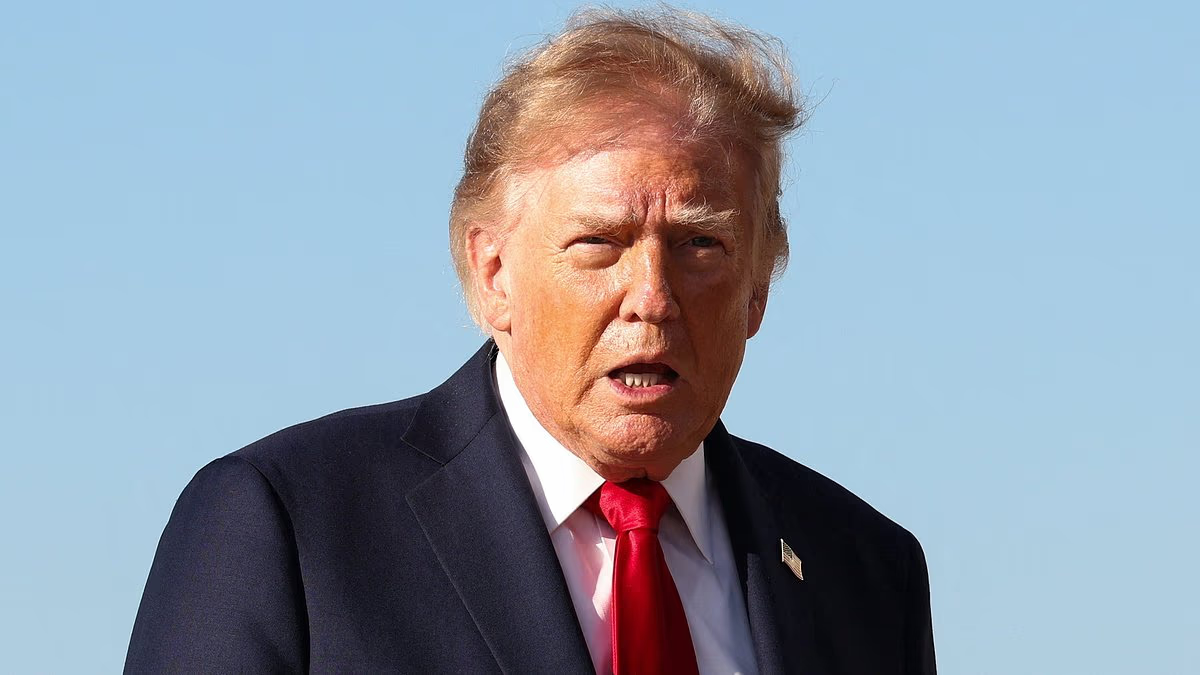
Meanwhile, the U.N. General Assembly is increasingly seen as an outdated forum from a bygone era when universal values, norms, and rules were bywords for the state of the international order. In contrast, the Trump-Xi meeting reflects the world we are living in now with a more power-driven, “might makes right” international system.
Each vision has its own advocates. The United States under the Trump administration clearly favors power over principle, with a preference for bilateral interactions between so-called great powers. This has been reflected in Trump’s proclivity for one-on-one meetings with strongman leaders, such as Russian President Vladimir Putin in Alaska last August and the meeting with Xi in Beijing in May. The Trumpian worldview also favors unilateral action as noted by the so-called Donroe Doctrine, which advocates a “spheres of influence” approach toward international relations.
Meanwhile, China seeks to project an image of itself as a more responsible power compared to the United States. In doing so, it advocates for multilateralism and upholding the rules-based international order through its support for the United Nations for example. However, in reality Beijing is increasingly leaning in the direction of unilateral action through acts of economic coercion – leveraging its centrality to global supply chains, particularly in critical and emerging technologies – and gray zone tactics, as evidenced by its actions in the Taiwan Strait and South China Sea. It also seeks to use forums that represent the Global South to propagate its own worldviews, embedded in its four initiatives: the Global Development, Governance, Security, and Civilization Initiatives.
India’s Predicament
Where does this leave countries like India?
New Delhi has demonstrated a fondness for hosting large summits, from its G20 Summit in 2023 to the AI Impact Summit earlier this year and now the BRICS Summit (the fourth time India has hosted the latter). In all these forums India has sought to promote itself as a so-called voice of the Global South. As G20 president, India facilitated the entry of the African Union into the grouping. At the AI Impact Summit, it advocated for the “democratization” of artificial intelligence (echoing its rhetoric on digital inclusion through promoting Digital Public Infrastructure).
Prime Minister Narendra Modi’s speech at the 2026 BRICS Summit continued this narrative by calling for transforming the Global South “from rule takers into rule-shapers.” He described the current structure of global governance as a “pyramid of privilege,” with the Global South being on the “front row of global crises, but the backrow of decision-making.”
Modi’s remarks could be seen as a counterpart to Canadian Prime Minister Mark Carney’s speech at the Davos World Economic Forum earlier this year. But whereas Carney’s remarks were seen as a “call to arms” for the world’s middle powers, Modi’s were marching orders for the Global South.
As chair of this year’s BRICS Summit, New Delhi also sought to promote a more benign and inclusive worldview, adopting the slogan of “Humanity First,” which was complemented by Modi’s “people-centric” approach. In doing so, however, India’s worldview appears out of sync with the current state of the world order, which is increasingly fragmented and plagued by multiple conflicts.
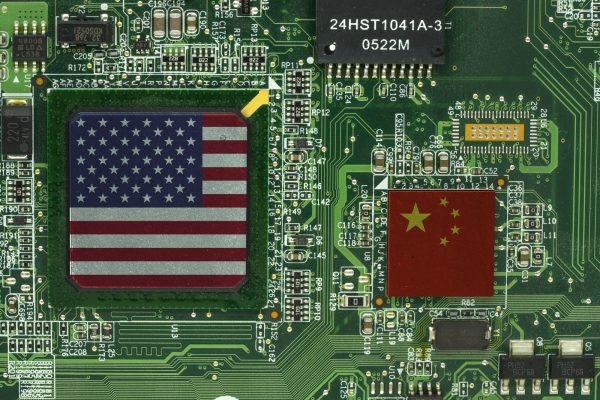
This comes at a time when forums like BRICS are being squeezed by newer groupings. On one side are bilateral summits between major powers such as this week’s Trump-Xi meeting. As the world’s technology superpowers, it is more likely that China and the United States will set the terms on AI regulation at their bilateral summits than forums like the BRICS or AI Impact Summit. The same can be said of other important topics, from global conflict to climate.
At the same time, BRICS is being challenged by newer, smaller, often single-issue focused or geographically based groupings of middle power states. The recently announced trilateral defense pact between Pakistan, Saudi Arabia and Turkiye is an example of this. This is not to say that these other initiatives are more effective than the BRICS, but they are a sign of things to come. These bilateral and minilateral groupings are often far nimbler and thus better positioned to reach consensus than groupings with large, open, and inclusive memberships – whether the United Nations or the expanded BRICS.
Ultimately, for forums like the BRICS to remain relevant, they will likely have to become further embedded in the China-led global order. But in doing so, this will alienate members like India that have long sought to preserve their strategic autonomy. This presents member-states with a quandary: will these forums dissolve into irrelevance or become part of China’s orbit?
For decades, New Delhi resisted Washington’s overtures to become part of the U.S.-led security architecture. Now India will need to see if it can retain its autonomy in a world where the most effective forums representing the Global South are likely to be led by China. With one superpower (the United States) increasingly abjuring its global responsibilities while the other (China) has yet to come to terms with its new role as a global power, the rest of the world is learning to adapt. The season of summits reflects these shifting dynamics.



















 English (US) ·
  French (CA) ·
  French (FR) ·