

 2 hours ago
11
2 hours ago
11
PROTECT YOURSELF with Orgo-Life® QUANTUM TECHNOLOGY
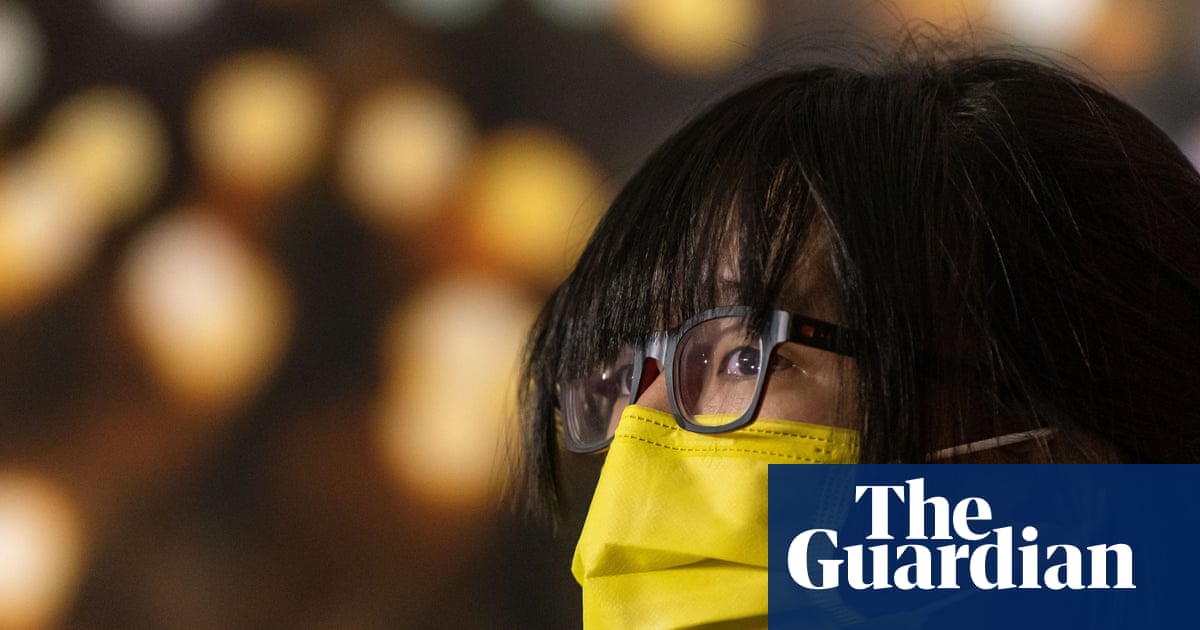
Orgo-Life the new way to the future Advertising by AdpathwayTwo Hong Kong activists who organised annual vigils marking China’s deadly Tiananmen crackdown in 1989 have been found guilty of “incitement to subversion” in one of the most high-profile cases in Hong Kong since Beijing imposed its national security law in 2020.
Lee Cheuk-yan, 69, and Chow Hang-tung, 41, “incited other persons to organise, plan, commit or participate in acts by unlawful means with a view to subverting the state power”, a press summary handed out to reporters said. The defendants each face a maximum penalty of 10 years in jail, with sentencing expected at a later date.
Lee and Chow’s trial began in January and took place over 24 days. A third defendant, the 74-year-old former lawmaker Albert Ho, pleaded guilty in January.
Chow, who represented herself, told the court in May that the law itself was on trial.
France and Germany said on Friday they “deeply regret” Chow’s conviction. “Peaceful advocacy for human rights does not constitute a crime,” the countries’ foreign ministries said of the activist, who was awarded the Franco-German prize for human rights in 2023.
Lee and Chow were leaders of the now-disbanded Hong Kong Alliance, which organised the city’s annual vigil in memory of those killed in the crackdown on pro-democracy protesters in Beijing in 1989.
In court, Lee and Chow waved to supporters from the dock, where they were surrounded by correctional officers. Lee appeared solemn as the judge handed down the verdict. He made a heart-shaped gesture with his hands and waved to supporters before being led out of the court.
Hong Kong and Macau were formerly the only places on Chinese soil that permitted public vigils to mourn those killed on 4 June 1989, when Chinese sent troops and tanks to crush protests calling for political reform in and around the capital’s Tiananmen Square.
However, public commemoration has been in effect banned since Beijing imposed a national security law on Hong Kong in 2020, after huge and sometimes violent pro-democracy protests the year before.
The Alliance’s leaders were charged in 2021 and have been imprisoned since. Ahead of the verdict, Chow wrote a message from prison, seen by the Guardian, addressed to the UK prime minister, Andy Burnham. “They are trying to rewrite Hong Kong history … they certainly want to erase some memories, or memories of some chapters in our history,” the Cambridge-educated barrister wrote.
Chow added in the letter: “Britain has a non-delegable duty to adopt a more robust stance in the face of the growing threat from a totalitarian and aggressive China.”
The case centred on the Alliance’s slogan demanding an “end to one-party rule”. The court found that the defendants “intended to cause others to lose confidence in the Chinese Communist party by stirring up hostility and causing division”.
The defence argued that the Alliance was exercising its freedom of speech. The rights group Amnesty International has said the case against Lee and Chow “relies on vague, overly broad and arbitrary definitions of ‘subversion’”.
The UK Foreign Office’s Indo-Pacific minister, Rosie Winterton, said: “This verdict is a further demonstration that even peaceful acts of remembrance in Hong Kong are now treated by the authorities as threats to national security. The extensive use of Beijing’s national security law to punish and restrict peaceful expression undermines the commitments China made to Hong Kong under the 1984 Sino-British joint declaration. We reiterate our call for the national security law to be repealed, and for rights and freedoms to be respected in the Hong Kong special administrative region.”
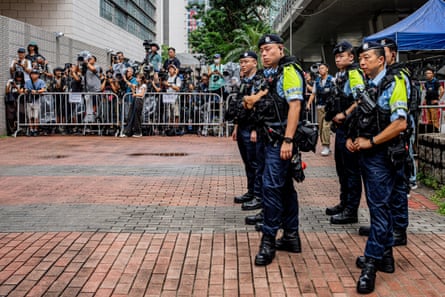
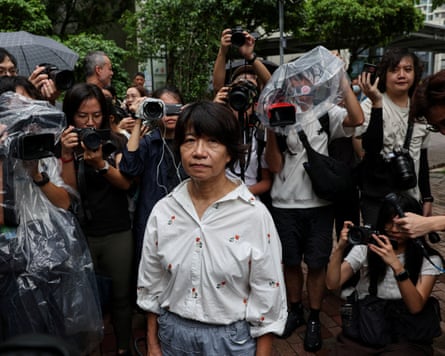
Dozens of police officers gathered outside the courthouse and ushered reporters away as they stopped to film audience members queueing outside before the hearing began on Friday.
Members of the public had queued for days to secure a seat in the Hong Kong court. “To me, this case illustrates the absolute power of Beijing in reshaping Hong Kong’s civil society through the national security law,” one supporter told the Guardian.
“This outcome highlights the central government’s total control regarding national security enforcement in the region,” another supporter said.
Hong Kong was promised certain political freedoms not granted in the rest of the country when it was returned to China in 1997. Critics say the national security law has decimated civil society. Most of the city’s opposition leaders have been detained or have fled.
Authorities say the law was needed to restore order after a year of protests rocked the international financial hub in 2019.

















 English (US) ·
  French (CA) ·
  French (FR) ·