

 8 hours ago
7
PROTECT YOURSELF with Orgo-Life® QUANTUM TECHNOLOGY
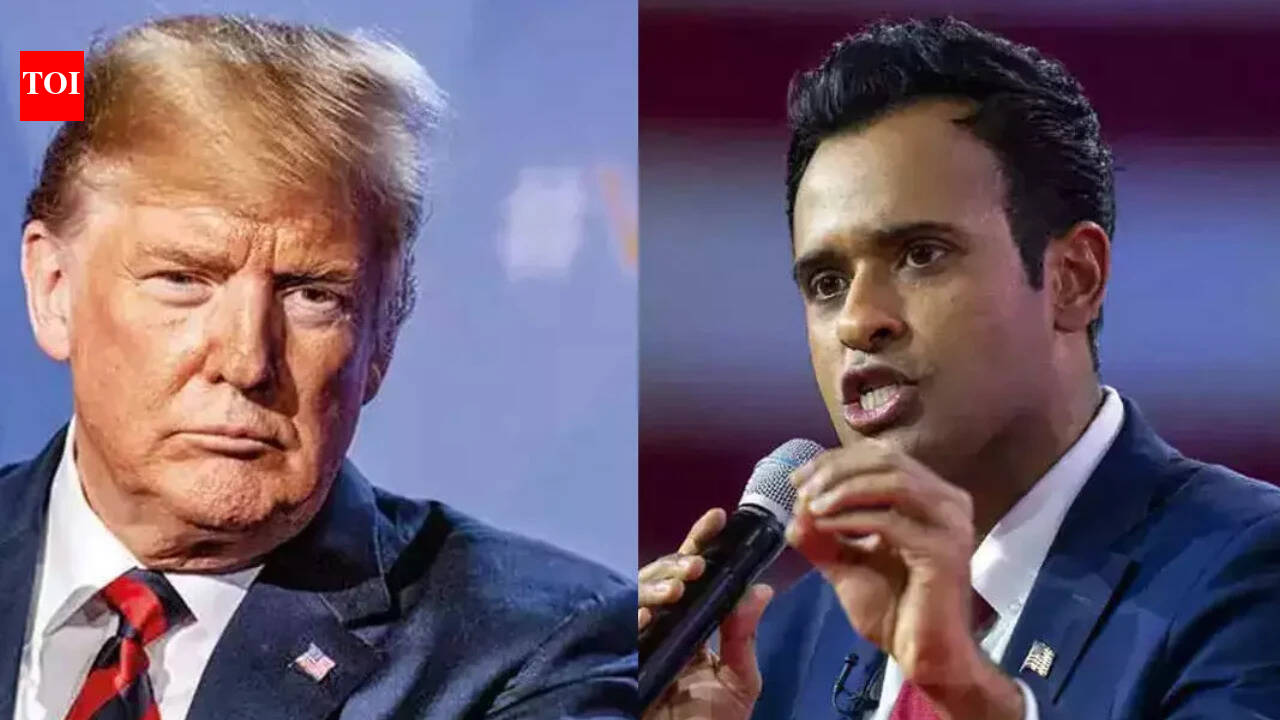
Orgo-Life the new way to the future Advertising by AdpathwayJust before the South Korea-U.S. Ulchi Freedom Shield exercise began in mid-August, U.S. President Donald Trump ordered a substantial reduction in its scale. Describing the drills as “costly” and an “inappropriate and hostile” signal to North Korea – a state he termed “unthreatening and respectful” – Trump also criticized what he described as Seoul’s lack of support for U.S. operations against Iran.
Trump’s sudden decision raised concerns about South Korea-U.S. defense readiness, alliance reliability, and Washington’s wider commitment to Asia. Several analysts warned that reducing exercises could weaken deterrence and alliance coordination, while others questioned whether the move would secure reciprocal restraint from Pyongyang. Such concerns are understandable: joint military exercises are a visible manifestation of the South Korea-U.S. defense commitment, while North Korea routinely denounces them as rehearsals for war.
The reduction alone, however, does not carry a single, self-evident political meaning. U.S. commanders have since emphasized that other combined training continues and proposed changes to its frequency and geographic distribution. How audiences interpret these changes depends on the wider pattern of cooperation, established relationships, and political context.
Scale, Scope, and Strategic Meaning
Joint military exercises can serve two different but complementary strategic functions. They demonstrate capability and resolve to deter adversaries, but exercises also facilitate defense diplomacy. Repeated military cooperation can help build predictability, trust, interoperability, and institutionalized relationships among participants.
Our research suggests that an exercise’s scale and scope alone cannot reliably distinguish between these functions. Deterrence and defense diplomacy often generate the same observable characteristics, making it difficult to determine where one ends and the other begins simply by examining an exercise’s material features.
Larger and more complex exercises – featuring tens of thousands of troops, sophisticated command-and-control systems, live-fire maneuvers, and complex scenarios – can demonstrate greater warfighting capability and resolve to deter. At the same time, however, those same characteristics may instead reflect years of accumulated defense cooperation and deeper levels of trust and institutional integration between the participating militaries. Their material features reveal what militaries practice and provide evidence of their capabilities but cannot by themselves establish the political messages governments intend or how different audiences will interpret them. Rather, as a political signal, joint military exercises ultimately depend on what participating states and other audiences make of them.
Different audiences will not necessarily derive the same meaning from the same exercise. Washington might intend a reduction in Ulchi as restraint toward Pyongyang, while North Korea might interpret it as a concession, Seoul as uncertainty over U.S. commitment to the bilateral alliance, and Beijing as evidence of Washington’s transactional approach to alliance management. Established relationships and political contexts are therefore essential to interpreting an exercise’s strategic meaning.
Instead, established relationships and political contexts are more important in determining the strategic meaning of exercises than scale and scope alone. The history of Ulchi itself illustrates this.
Ulchi’s scale and scope have seldom increased in tandem with the danger from North Korea. This divergence is significant. If Ulchi’s scale simply tracked the North Korean military threat, as one would expect for greater deterrence, participation should have risen relatively consistently alongside Pyongyang’s expanding nuclear and missile capabilities. Instead, exercise participation has repeatedly risen and fallen according to changes in the diplomatic environment. Participation declined during periods associated with the Six-Party Talks and suspended altogether to facilitate diplomacy with North Korean leader Kim Jong Un in Trump’s first term.
The scale of South Korean participation also reflects domestic politics. According to publicly available data, South Korean troop numbers were generally lower under the progressive administrations of Kim Dae-jung and Roh Moo-hyun, increased substantially under conservative presidents Lee Myung-bak and Park Geun-hye, and were again affected by diplomatic engagement under Moon Jae-in. These patterns are consistent with progressive administrations’ greater emphasis on creating diplomatic space for negotiations with the North and conservative administrations’ stronger emphasis on deterrence and alliance cohesion.
Trump’s decision should therefore be understood within this broader political context. Indeed, his own explanations identified several purposes for the same reduction: reducing costs, signaling restraint toward North Korea, and expressing dissatisfaction with Seoul over Iran. The reduction’s material features cannot establish which purpose predominates or how different audiences will interpret it.
Interpreting the Wider Exercise Program
Recent developments illustrate why Ulchi’s reduction should also be understood within the wider pattern of South Korea-U.S. military cooperation. In an interview with the Financial Times, U.S. Army Pacific commander General Ronald Clark emphasized both displaying military capabilities to influence adversaries’ calculations and strengthening military partnerships. His account illustrates how the two functions can reinforce one another: military partnerships help sustain the access and cooperation through which forces demonstrate capability and resolve.
South Korea-U.S. cooperation has continued despite the reduction in Ulchi. Eighth Army commander Lieutenant General Joe Hilbert clarified that other combined training continued, although some activities affected by Trump’s order were conducted by South Korean forces alone. Continued trilateral training through Freedom Edge and South Korea’s observer participation in Keen Sword also demonstrate different forms of military engagement. Observation offers opportunities for familiarity and relationship building without active participation in training. These activities do not cancel out Ulchi’s reduction, but they complicate its interpretation as a broader withdrawal from military cooperation.
Exercise design can also change in response to operational requirements. U.S. Forces Korea commander General Xavier Brunson has proposed more frequent training and geographically dispersed operations, drawing lessons from Ukraine about the vulnerability of concentrated command posts. He suggested the possibility of expanding the scope of exercises from Jeju Island to Gyeonggi Province, while also adjusting the training schedule to include additional smaller-scale drills between the two large annual exercises, Freedom Shield and Ulchi Freedom Shield. Frequency, geographic reach, and the concentration of forces need not change together. Thus, the size of a single exercise therefore provides an incomplete picture of the training program. Whether audiences interpret such changes as reinforcing alliance commitments or altering priorities depends on their political context.
Reducing Ulchi or cancelling a single amphibious exercise does not erase South Korea-U.S. warfighting capability. The institutional defense relationship between the two militaries established over decades – combined command structures, joint planning, interoperability, established procedures, and accumulated experience and “muscle memory” – remains in place. None of this is to suggest that exercises are irrelevant to preparedness; repeated reductions or cancellations over an extended period could eventually erode South Korea-U.S. interoperability and combined warfighting effectiveness. The effects, however, would be cumulative rather than instantaneous. A reduction or cancellation of a single iteration should not be conflated with the disappearance of capabilities built through decades of combined training.
Exercise scale and scope matter, but their strategic meaning is neither fixed nor self-evident. Rather than asking simply whether the United States is exercising more or less and with whom, the more pertinent questions are what particular exercises are intended to accomplish and how Seoul, Tokyo, Washington, Pyongyang, Beijing and other regional audiences interpret them. The deterrent or diplomatic value of an exercise ultimately lies not simply in how many troops participate, but in the political meaning that states attach to their participation – or absence.















 English (US) ·
 French (CA) ·
 French (FR) ·