

 2 months ago
16
2 months ago
16
The Supreme Court on Thursday (May 7, 2026) said a deluge of petitions complaining about religious practices and religion would follow if the courts start interfering in matters of faith.
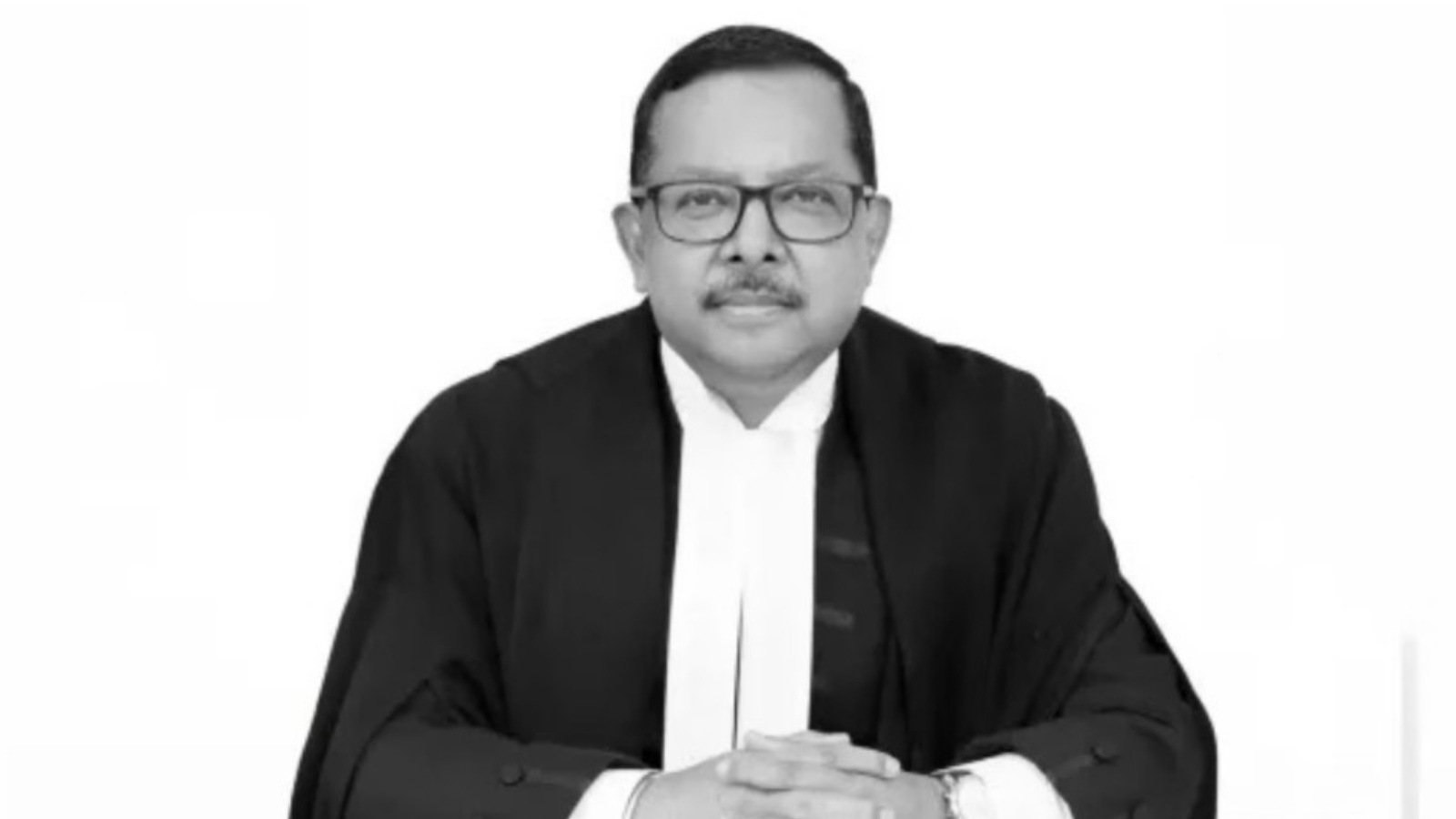
“If everybody starts questioning religious practices or matters of religion before a constitutional court, then what will happen to this civilisation where religion is so intimately connected with the Indian society. There will be hundreds of petitions questioning this right, that right, opening of temple, closure of the temple,” Justice B.V. Nagarathna observed during a nine-judge Bench hearing of the Sabarimala review case.

Justice Nagarathna said India’s uniqueness lay in the fact that it was a “civilisation” in which the intimate relationship between people and religion has been a constant, despite pluralities and diversities in society.
The judge asked whether the courts were the right forum to question, examine and intervene in this relationship.
“We nine judges, what we lay down is for a civilisation, that is India. India must progress. Despite all its development, economy, everything, there is a constant in us, we cannot break that constant. That is what is troubling us,” Justice Nagarathna said.
Justice M.M. Sundresh, on the Bench headed by Chief Justice of India Surya Kant, said entertaining petitions challenging religious practices and beliefs for violation of fundamental rights may open the floodgates with far-reaching consequences.
“Every religion will break, every constitutional court will have to be closed,” the judge remarked.
Justice Nagarathna said the symbiotic relationship between a person and her religion has remained a constant in Indian society despite all the progress and development made by the nation.
Senior advocate Raju Ramachandran, for petitioners challenging the practice of excommunication in the Dawoodi Bohra community, pointed out that India was indeed a civilisation, but a civilisation governed by a Constitution.
“Therefore, nothing that goes against the grain of our Constitution can be countenanced in a civilised society governed by the Constitution,” Mr. Ramachandran said.
He said the delicate task of protecting people from practices which violate fundamental rights required judicial statesmanship.
“That is where the very difficult task of the courts comes in. Courts cannot throw up their hands, saying ‘otherwise we will have so many petitions’. The duty of the courts is to see if there is a violation of fundamental rights or whether the petition is about a mere difference among members of a religion. But there cannot be a judicial hands-off,” he submitted.













 English (US) ·
  French (CA) ·
  French (FR) ·